
Beyond the Canvas: Four Contemporary Textile Art Series by Lauren Williams
For the past twelve years, my work has been an ongoing exploration of fiber, color, movement, materiality, and the relationship between artwork and the space surrounding it.
I didn't begin with a plan to develop multiple bodies of work. In 2014, I began with a material and an idea: suspending individual strands of fiber and treating them almost as I might treat paint on a canvas.
That experiment became Canvas with Movement, the foundation of my practice.
Since then, my work has continued to evolve. New materials have entered the studio. Wood has given way to chrome and brass. Fiber has become finer. Forms have become more sculptural and architectural. Scale has expanded. And the relationship between softness and structure has become increasingly important to me.
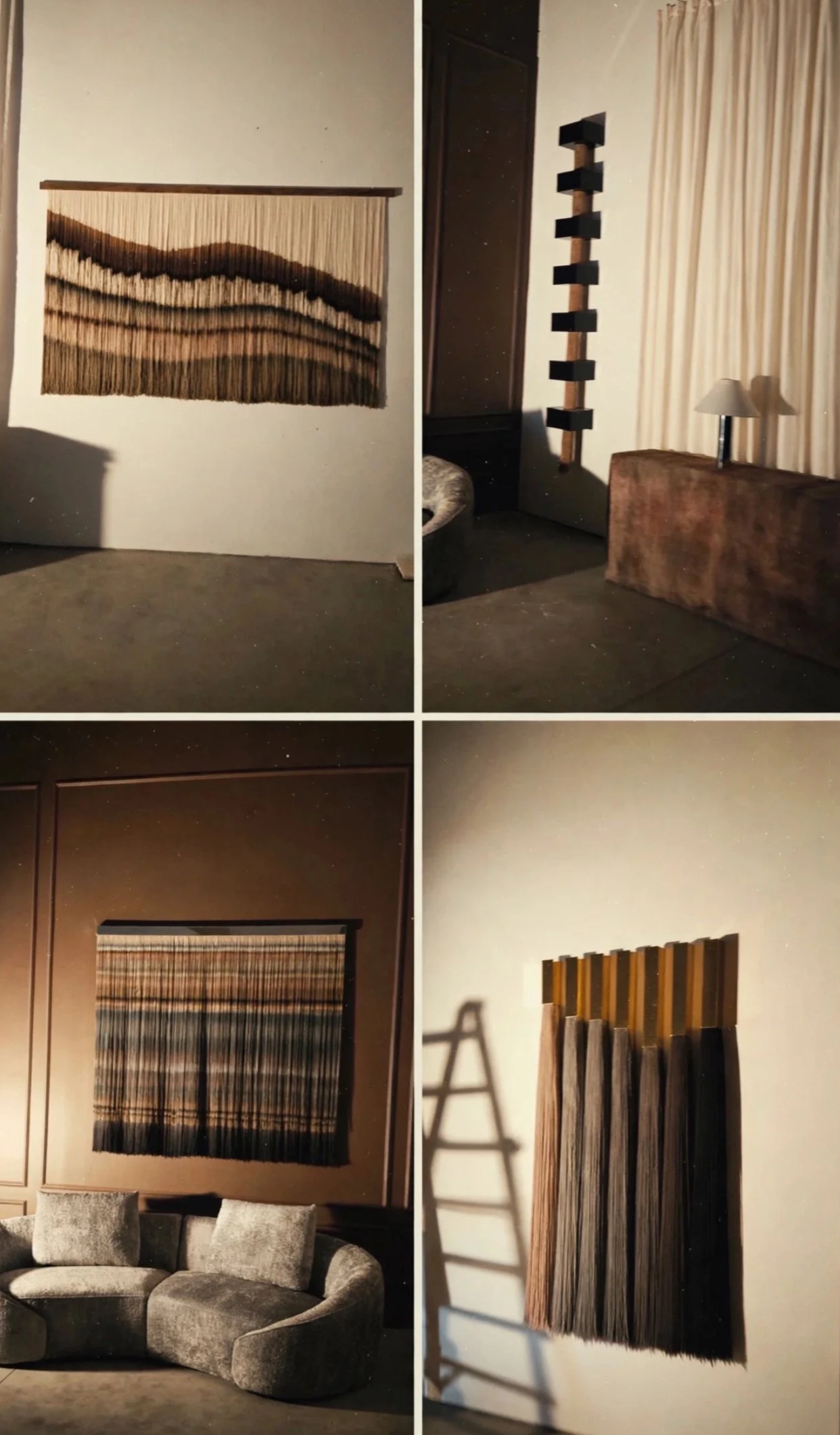
Today, my practice includes four primary series: Canvas with Movement, Refined Canvases, Squares & Strands, and Columns.
Each looks distinctly different, but they are connected by many of the same ideas I've been exploring from the beginning: movement, repetition, materiality, control, surrender, architecture, and the ways an artwork can respond to the life happening around it.
There are also different versions of me within each of them.
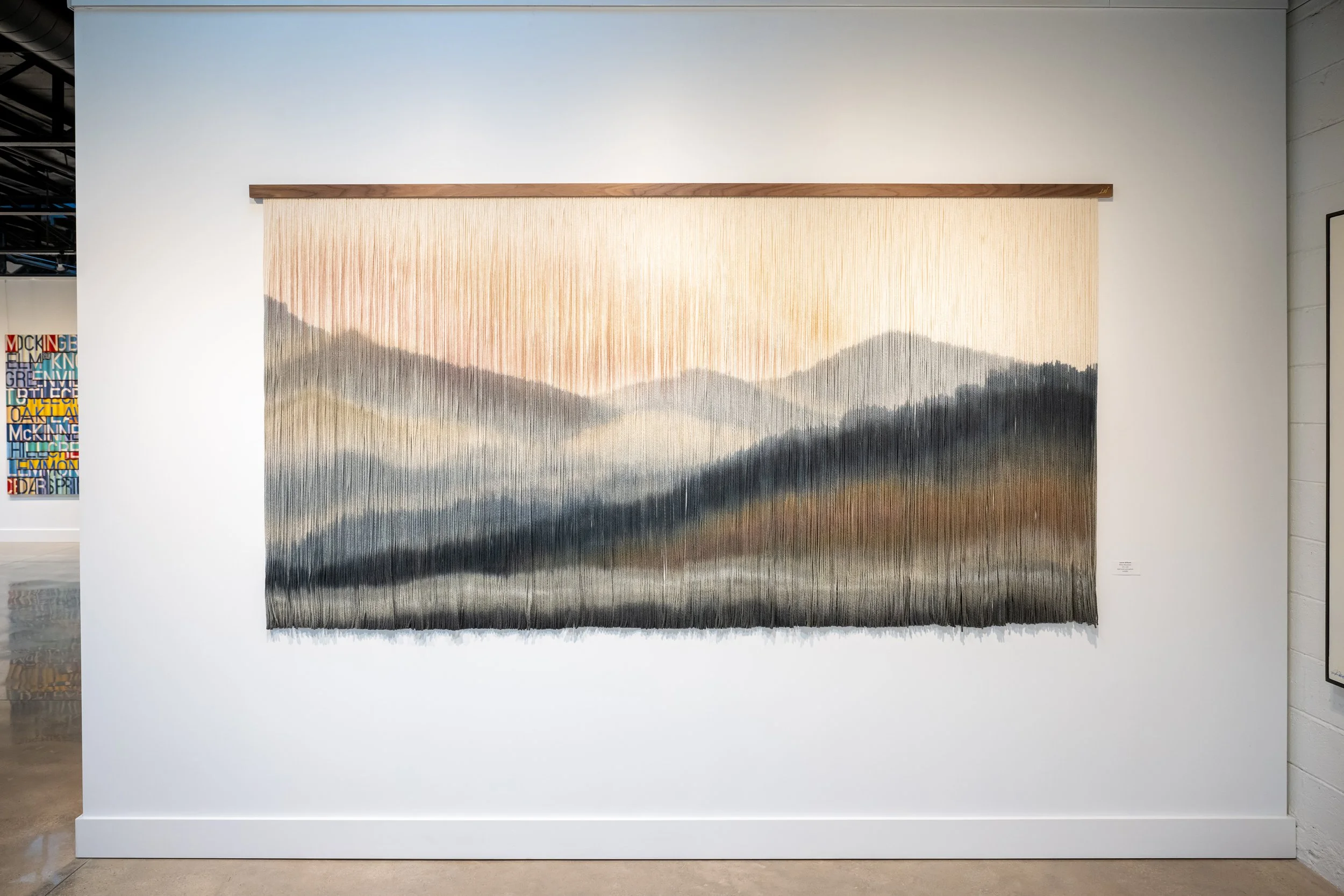
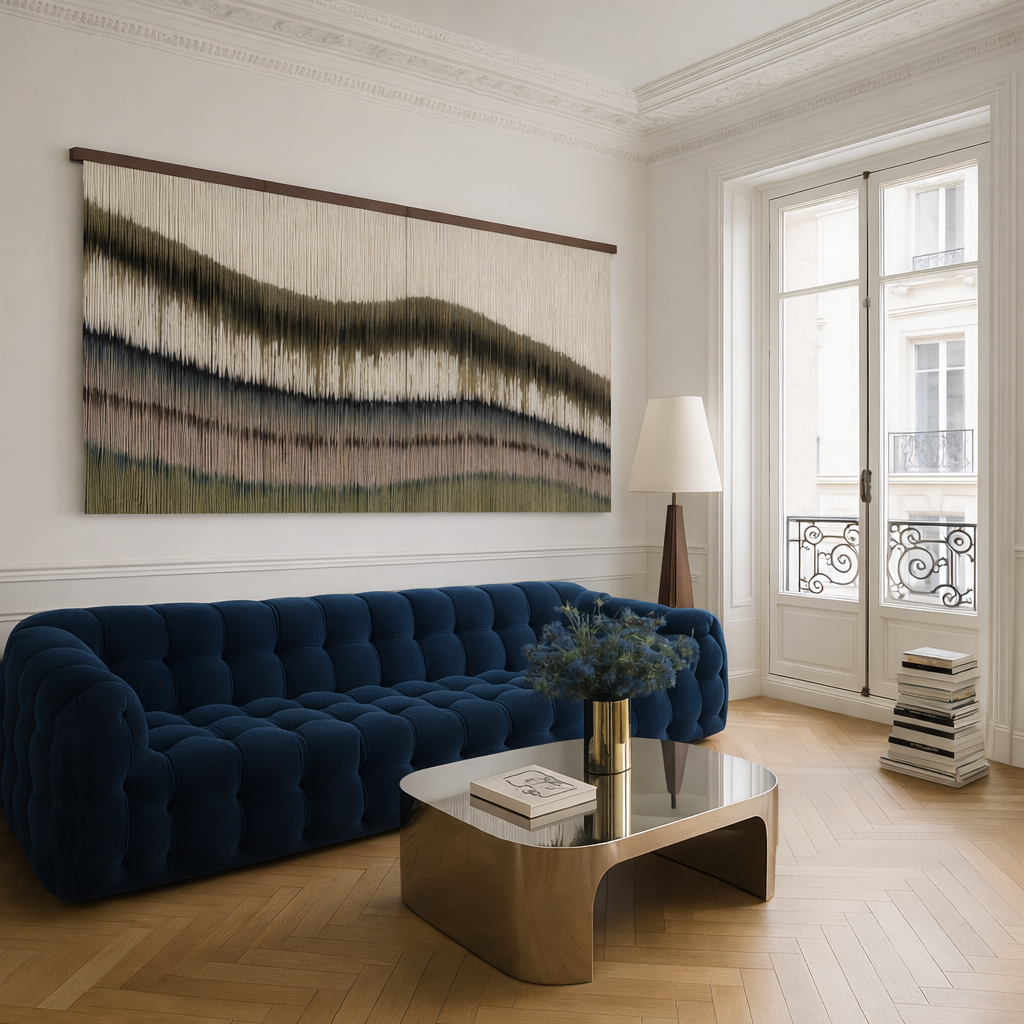
“Misty Mountains” textile art by Lauren Williams, Canvas With Movement series 2024
Canvas with Movement: Surrender, Change, and the Beauty of Moving Forward
Over the twelve years that I've been creating Canvas with Movement, what the work means to me has changed many times.
In many ways, there are different versions of myself within it.
When I first began working with suspended fiber, I wanted to control everything. Every strand. Every color. Every blend. How the dye traveled. How gravity affected the fibers. How the work moved.
It was exhausting.
Eventually, I began to understand that the more I surrendered to the material and the process, the more beautiful and organic the work became. I didn't need every strand to behave exactly as I intended. In fact, some of the most interesting moments happened when it didn't.
That realization became about much more than art for me.
At that point in my life, surrender was something I was also exploring through my faith and spirituality. The work became a physical reminder that relinquishing control didn't necessarily mean losing something. Sometimes it meant allowing something to become what it was supposed to be.
Twelve years later, the meaning of movement has evolved again.
Today, I think about the fact that life is never still.
We are always moving forward. Our children grow. We age. Relationships change. Seasons end and new ones begin. Our health changes. Our priorities shift. We become different versions of ourselves.
There are moments we want to hold onto and memories we should cherish, but movement doesn't diminish what came before it.
It carries it with us.
I've come to see movement less as something that simply happens to the artwork and more as part of the ethos of my entire practice.
A Canvas with Movement will never look exactly the same from one moment to the next. Air moves through it. Light changes across it. Someone walks past it. Individual strands shift and eventually settle somewhere slightly different.
I love the work for the same reason I've learned to embrace that movement in my own life.
It isn't supposed to stay still.
What began as an exercise in surrender has become an acceptance of change, growth, aging, endings, beginnings, and the many versions of ourselves we become along the way.
The materials may evolve. The forms may change. I certainly will.
But movement will always be part of me, and because of that, I think it will always be part of my work.
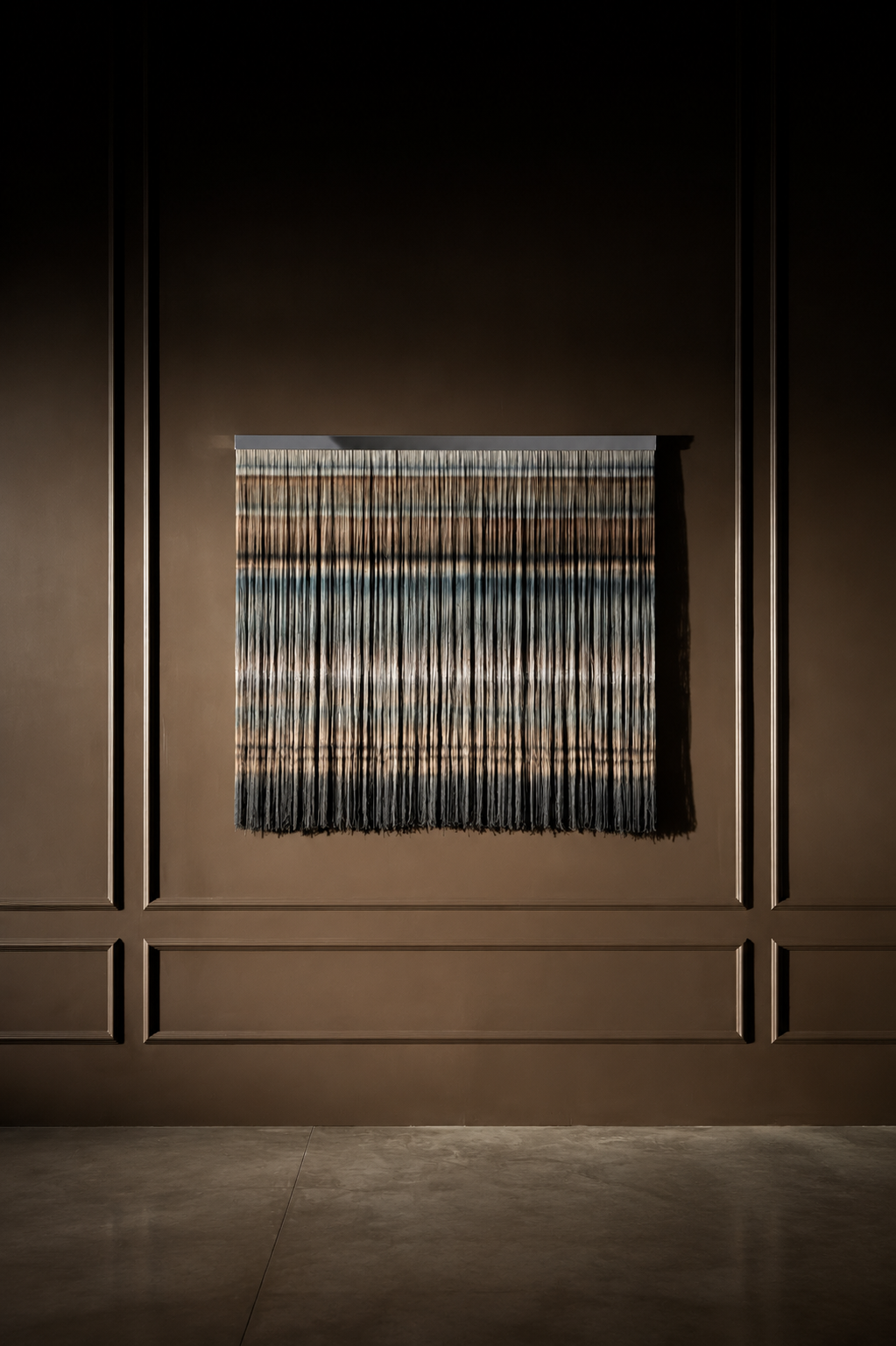
Refined Canvases: Precision, Reflection, and a New Material Language
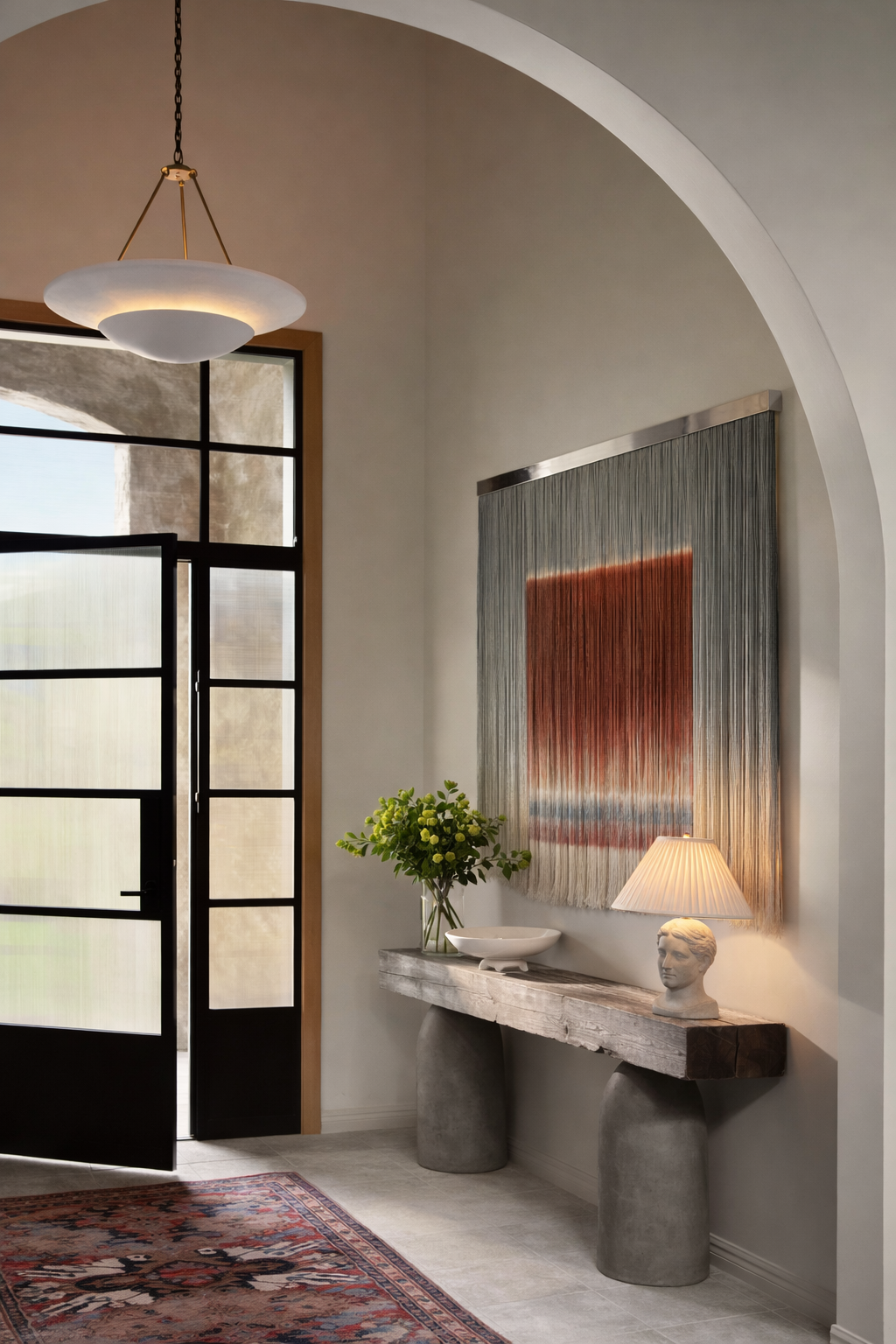
After working with the wool fibers and walnut structures of Canvas with Movement for nearly a decade, I became curious about what would happen if I changed the materials themselves.
Refined Canvases began with a much finer textile strand.
Instead of the 100 percent wool fiber I had worked with for years, I began using a blend of wool, bamboo, and Tencel. The resulting strands are incredibly fine and delicate, with a subtle sheen created by the bamboo and Tencel.
It immediately changed what was possible.
The thinner fibers allow me to work at a much finer level of detail. Dye lines can become sharper. Transitions can become more precise. Smaller gestures that might disappear within the heavier wool fibers can suddenly become an important part of the composition.
That precision introduced a different kind of control into my work.
Interestingly, after spending so many years learning to surrender control in Canvas with Movement, I found myself returning to it here in a completely different way. Not as an attempt to control how every individual strand behaves, but as an opportunity to become more intentional with the composition itself.
At the same time, I wanted the structure supporting the work to evolve.
For nearly ten years, my Canvas with Movement pieces were suspended from walnut wood. With Refined Canvases, I began working with chrome.
I was drawn to its reflectivity and to the contrast between the precise, architectural quality of metal and the softness of fiber. Chrome doesn't disappear into the artwork. It catches the room around it. Light, color, and fragments of the surrounding architecture become reflected in its surface.
The construction also allowed me to bring the fibers farther away from the wall than I had before.
That seemingly small change created an entirely new relationship with movement.
Because the strands are significantly finer and suspended several inches into the room, they respond to even subtle shifts in air.
Someone walks past. A door opens. Air moves through the room.
The strands respond.
There are moments when these pieces feel almost alive to me, like they're breathing.
That's what I find most compelling about Refined Canvases. The series allowed me to introduce greater precision and structure without sacrificing the quality that originally made me fall in love with fiber.
Movement is still there.
But it has become finer, more sensitive, and more deliberate.
The artwork isn't simply responding to the architecture anymore.
It's responding to the life happening within it.
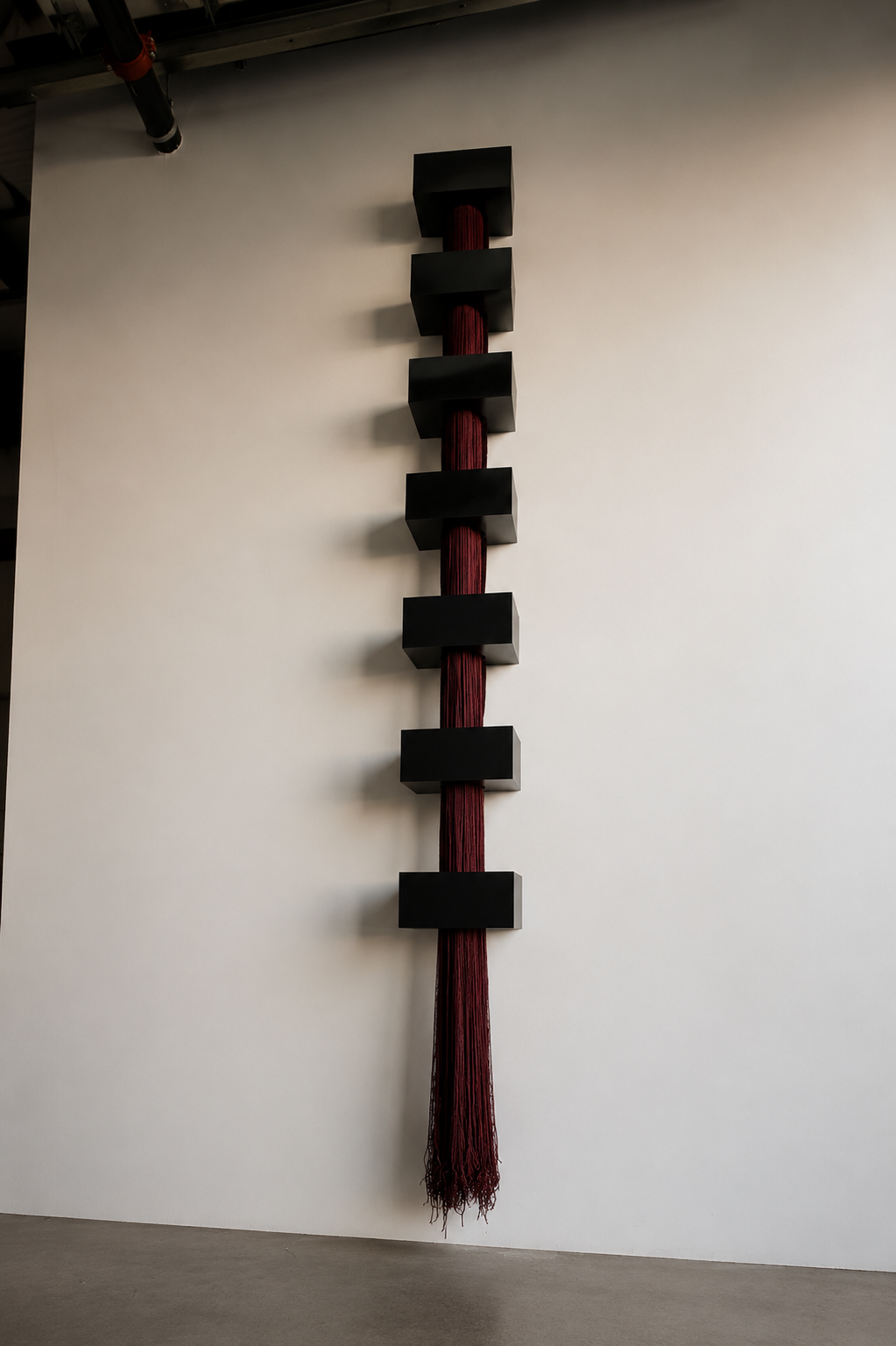
Squares & Strands: Protection Without Confinement
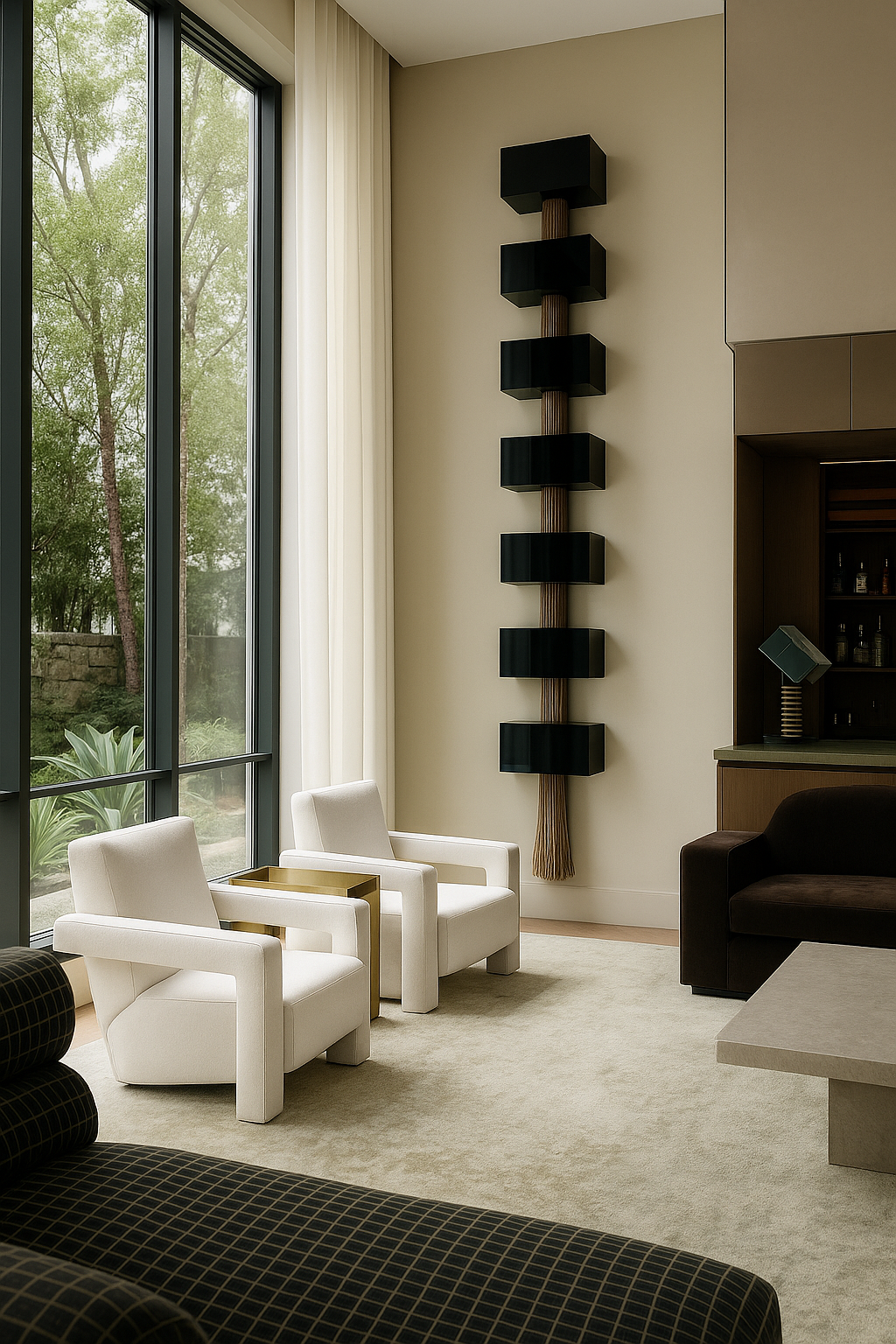
Squares & Strands began with a very simple idea that excited me: a gigantic tassel.
I loved taking something so familiar and changing its scale until it became something entirely different. At that size, the tassel was no longer simply decorative.
It became sculptural.
But I also knew I didn't want to simply suspend it from the wall. I wanted to create something around it.
That led me to the acrylic squares.
There is something about the structure that feels almost protective to me. The squares surround the tassel, creating an architectural framework around something incredibly soft and fluid.
They embrace it without completely containing it.
That distinction became important.
Each square is separated vertically by nine inches of open space. The repetition gives the work order and predictability, but those openings allow the fiber to remain exposed to the room.
The tassel can still move.
It can respond to air.
It can shift as someone walks past.
It can live and breathe within the architecture surrounding it.
I love that tension.
There is protection without confinement. Structure without restriction.
Visually, I've always been drawn to repetition and to the kind of precise, architectural geometry associated with artists like Donald Judd. Squares & Strands allowed me to explore some of those ideas through a material that behaves in almost the opposite way.
The squares are predictable.
The fiber isn't.
The structure repeats.
The movement changes.
One element creates order while the other introduces life.
I don't have to choose between structure and movement. They can exist together.
The architecture doesn't prevent the textile from moving.
It creates a place for the movement to happen.
Columns: Repetition, Reflection, and Architectural Scale
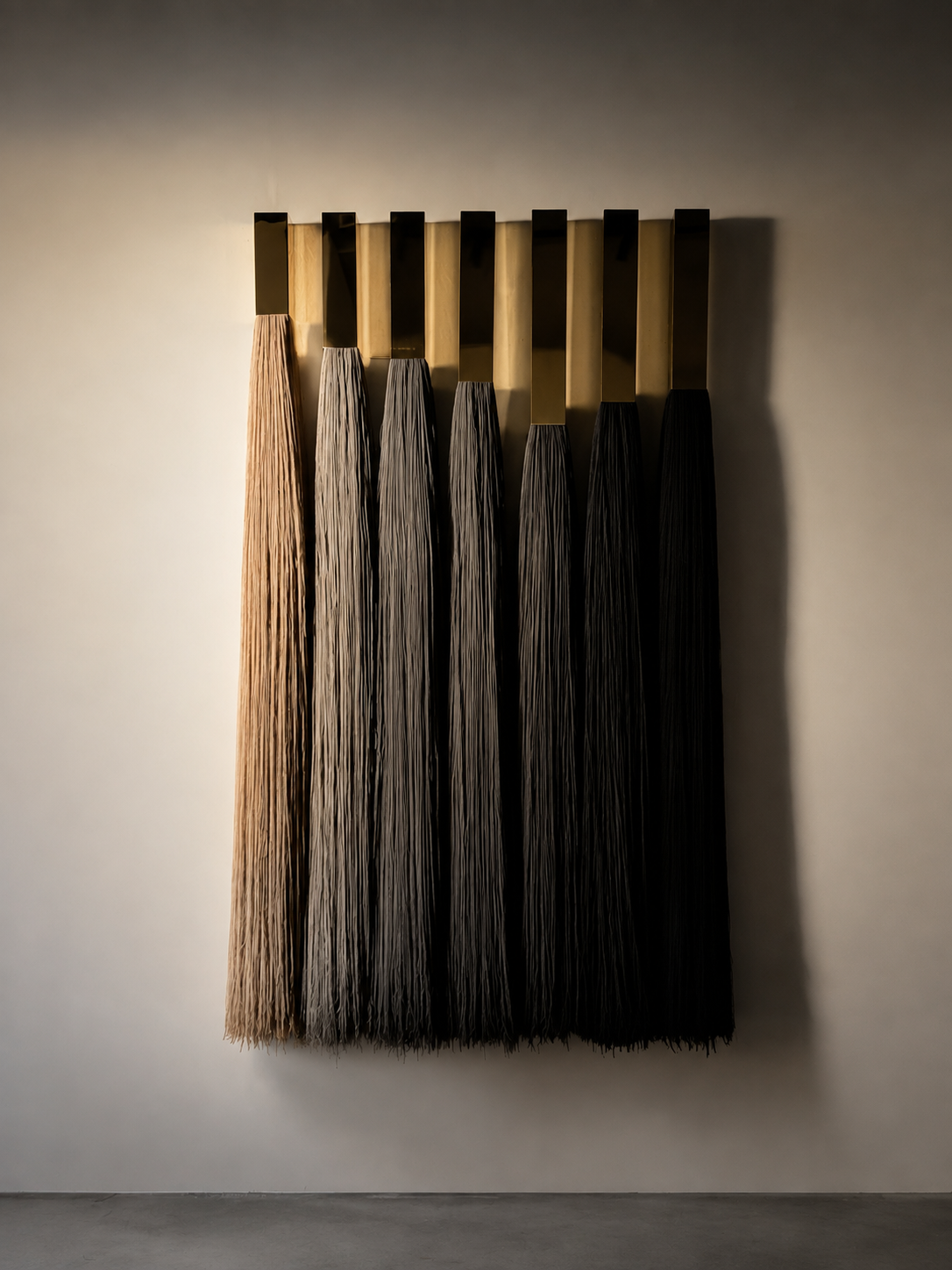
Columns is my newest textile series, and in many ways it continues questions I began exploring with Squares & Strands, but in an entirely new direction.
I knew I wanted to continue working with the idea of an exaggerated tassel, but this time I became interested in horizontal repetition rather than vertical repetition.
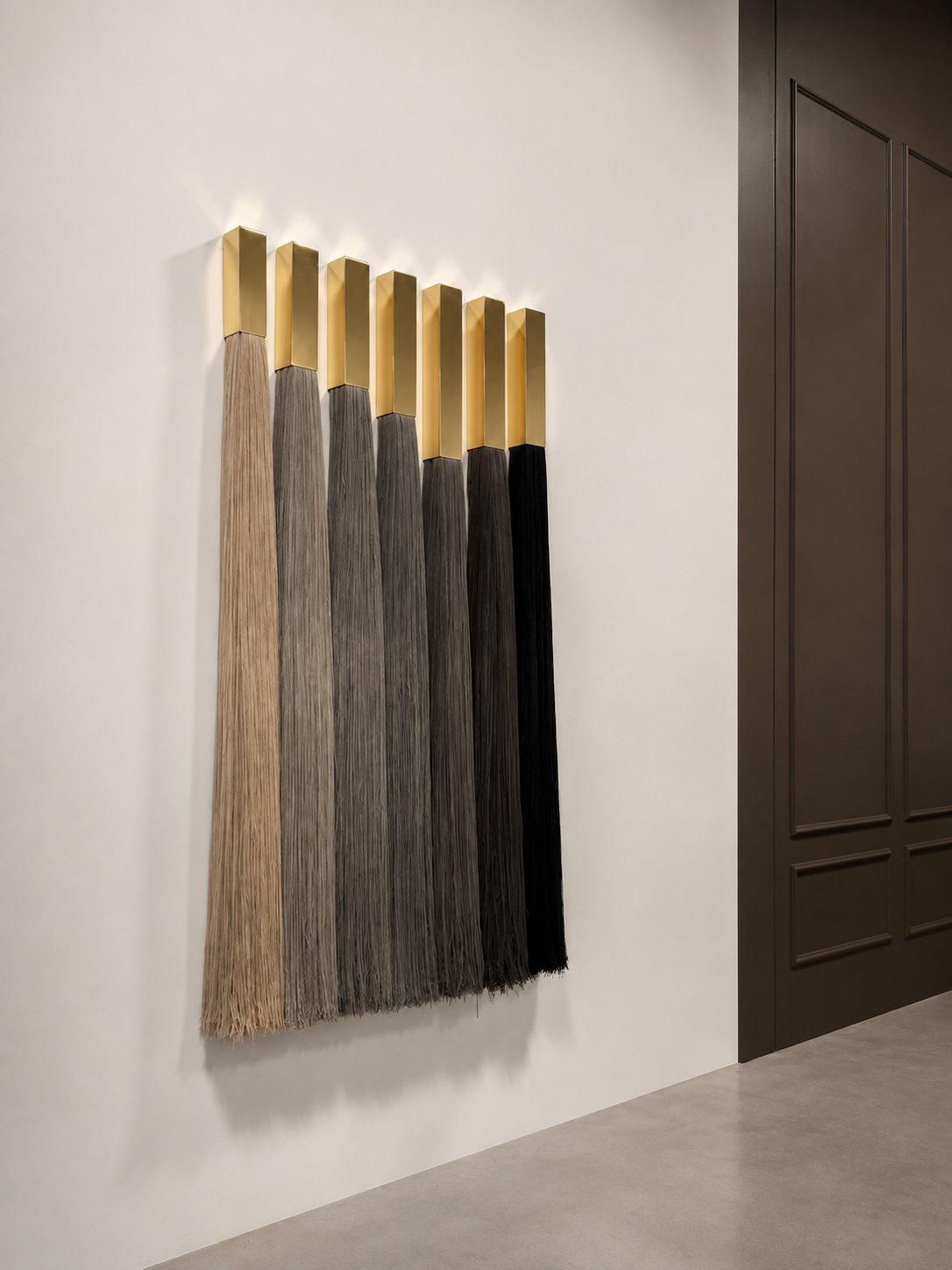
Each work is composed of a series of rectangular metal prisms mounted across the wall. I typically work with three-inch-by-three-inch columns spaced approximately three inches apart, although I'm already experimenting with commissions that expand those intervals to create much wider installations.
The result can become incredibly architectural.
For the first works in the series, I've been using highly polished brass. The reflective quality of the metal is an important part of the piece.
When multiple columns are installed beside one another, they begin reflecting light back and forth across their surfaces.
At certain angles, they almost appear illuminated.
I love that because the metal is doing something very different from the textile.
The brass is bold, precise, rigid, and highly reflective. Beneath it, the tassels extend downward in a soft vertical fall.
Structure above. Movement below.
That contrast is at the heart of the series for me.
The rectangular prisms create repetition and order across the wall, while the fiber extends beyond that structure and returns the work to something softer, less predictable, and responsive to its surroundings.
Light moves across the brass.
Air moves through the fiber.
The architecture of the room becomes part of both.
One of the things I'm most excited about with Columns is the ability for the work to respond to the scale of a particular space.
The distance between columns can change. The overall width can expand. Column heights can shift. Tassel lengths and colors can be developed specifically for a particular installation.
For me, that doesn't mean simply customizing an existing object.
It means using the architecture as one of the parameters of the composition.
A long wall might allow the repetition to stretch dramatically across a room. A tall space might call for a different relationship between metal and fiber. Changing the intervals between columns changes the rhythm of the entire piece.
That's something I'm currently exploring through commissions, and it's opening possibilities I hadn't considered when I first began the series.
After twelve years of working with textile, I'm increasingly interested in what happens when fiber is placed in conversation with materials that seem to oppose it.
Soft against hard.
Matte against reflective.
Movement against structure.
Textile against metal.
With Columns, I'm beginning to think about the artwork less as something that simply hangs on architecture and more as something that can be composed with architecture.
What Connects All Four Series
When I look at these four bodies of work together, I don't see four separate ideas.
I see an evolution.
Canvas with Movement taught me to surrender control and trust the material.
Refined Canvases allowed me to return to precision in a different way, using finer fibers, sharper compositions, reflective metal, and an even more sensitive relationship with movement.
Squares & Strands introduced architecture around the textile, creating structure and protection without eliminating the fiber's ability to move.
And Columns takes that relationship further, allowing repetition, metal, reflection, textile, and architectural scale to become part of the composition itself.
The materials have changed.
The forms have changed.
And I have changed.
But there are ideas that continue to appear throughout everything I make.
Movement.
Repetition.
Materiality.
Softness and structure.
Control and surrender.
Light.
Architecture.
And perhaps most importantly, the desire to continue pushing a material beyond what I already know how to do with it.
I didn't set out twelve years ago with a plan to make four bodies of work. I started with fiber and an instinct that there was more I could do with it.
Each series has become another chapter in figuring out what that means.
What Comes Next: Taking Movement Outside
After a very busy year in the studio, I still have one more thing up my sleeve.
For the first time, I'm exploring what happens when the ideas I've developed through textile leave the interior entirely.
I'm currently developing large-scale outdoor sculptures and installations designed to live among the elements. And to do that, I'm beginning to work with materials I've never used in this way before.
Instead of my traditional textile fibers, I'm experimenting with incredibly delicate chains suspended within larger metal structures.
In some ways, this feels like a significant departure from my textile work.
In other ways, it feels completely connected to everything I've been doing for the past twelve years.
I'm still thinking about movement.
I'm still thinking about gravity.
I'm still thinking about repetition, softness, and structure.
I'm still interested in what happens when many individual elements come together to create something that changes as the environment around it changes.
But outside, there is an entirely different collaborator: the elements.
Wind can move through the work. Sunlight can reflect from the metal. Shadows can shift throughout the day. The surrounding landscape and architecture can become part of how the sculpture is experienced.
Instead of trying to recreate textile in a material capable of living outdoors, I'm interested in carrying the language I've developed through textile into a new material altogether.
The material may be changing, but so much of what has driven my work remains.
Movement. Light. Repetition. Materiality. Architecture. And the tension between control and allowing a material to behave in ways I can't completely predict.
We already have several commissioned outdoor works in development for installation next year, including large-scale metal sculptures for a new collector. I'm not ready to share all of the details yet, but I'm excited by where this exploration is taking me.
Twelve years ago, I began by suspending strands of wool from a piece of wood and wondering what might happen if I treated those strands like paint.
I couldn't have known where that first experiment would lead.
From Canvas with Movement to Refined Canvases, Squares & Strands, Columns, and now into large-scale outdoor sculpture, each body of work has taught me something different about material, movement, control, architecture, and change.
There are many different versions of me within these works, and I hope there always will be.
My practice has never been about arriving at one final form or repeating what I've already made. It's about allowing the work to evolve as I do.
As I move into this next chapter, I'm carrying twelve years of experimentation with me while stepping into materials, scale, and environments that are completely new. Several of these outdoor commissions are already in development for installation next year, and I'm incredibly excited to finally begin sharing where the work is going next.