
Textile Art vs. Fiber Art: What’s the Difference?
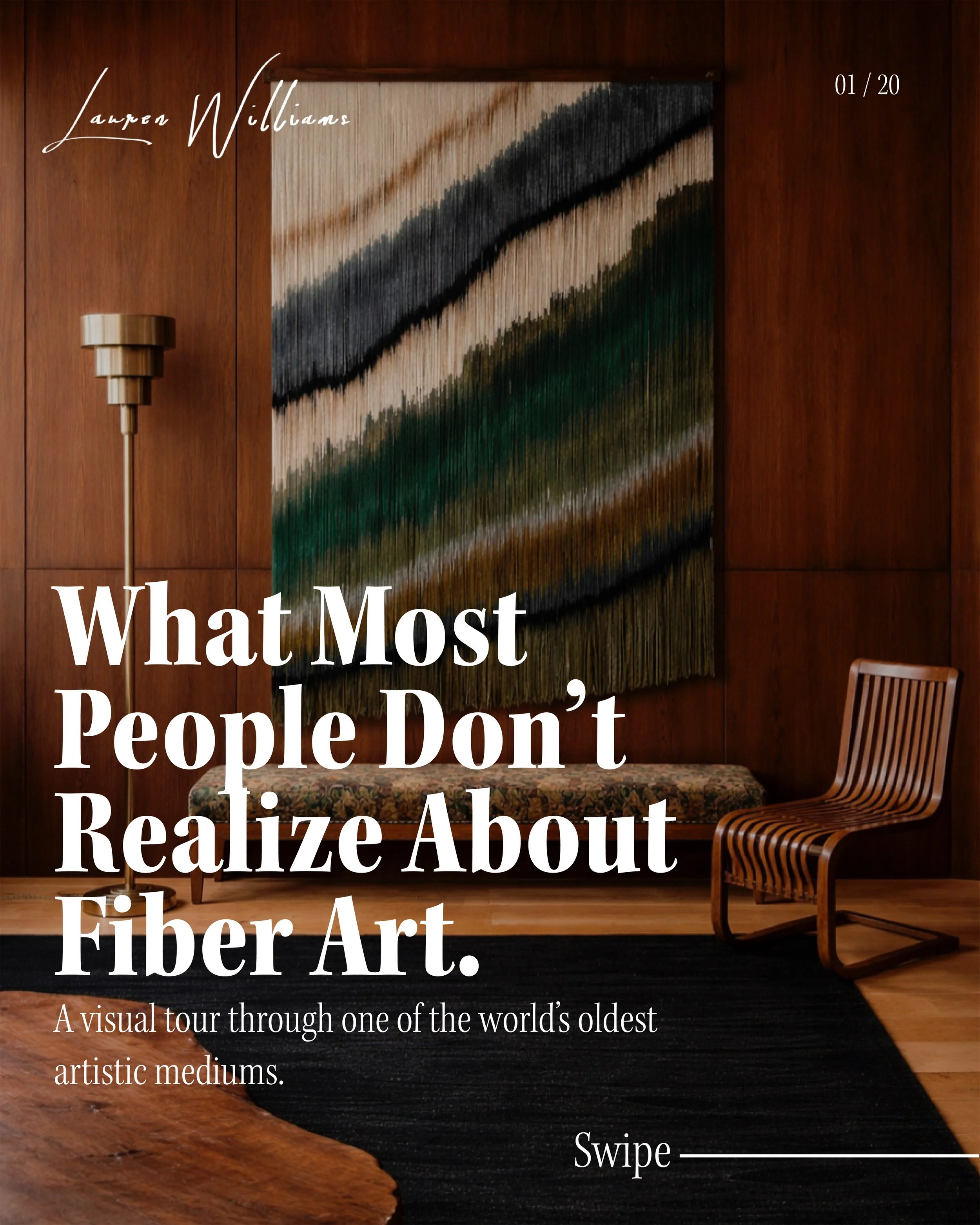
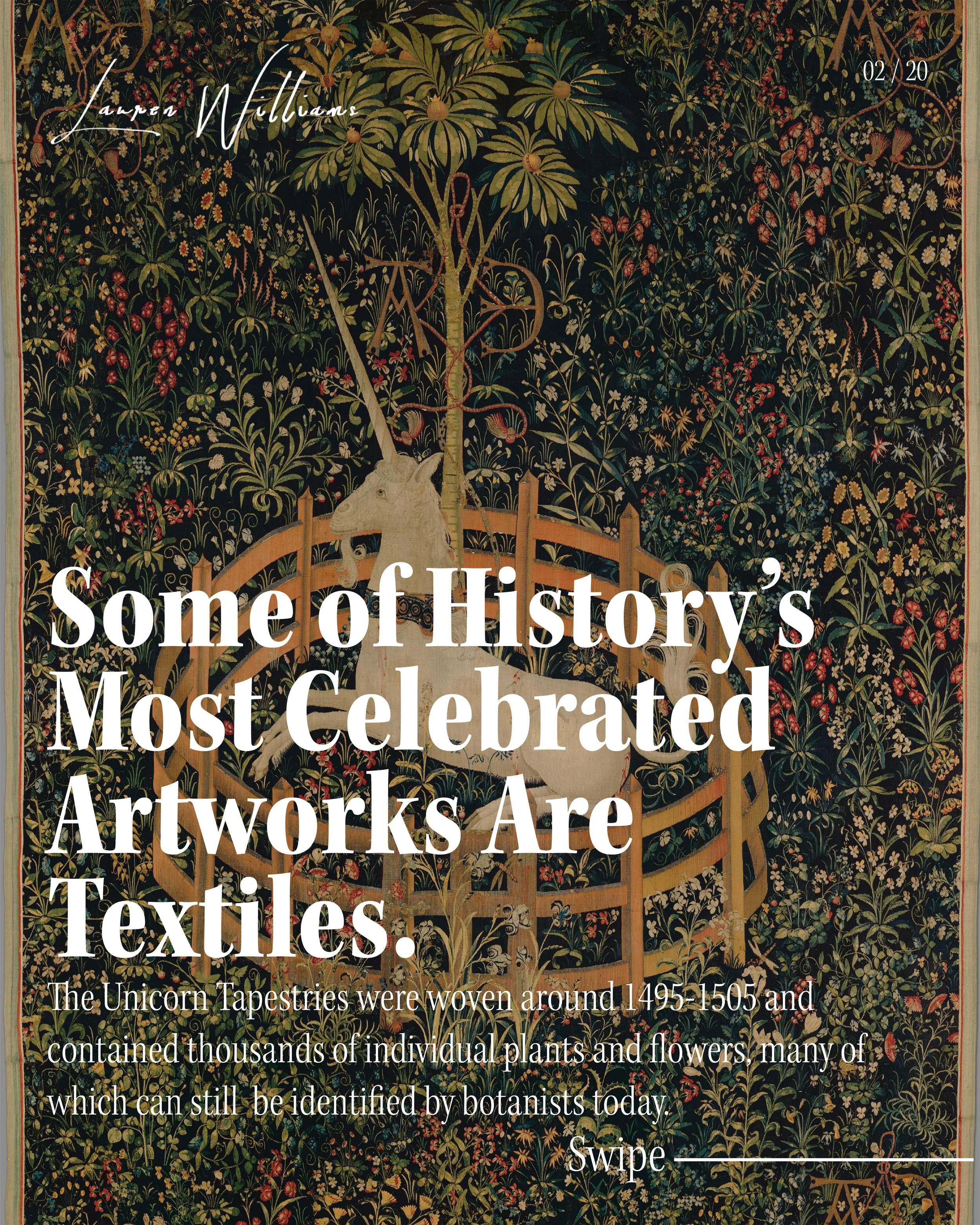
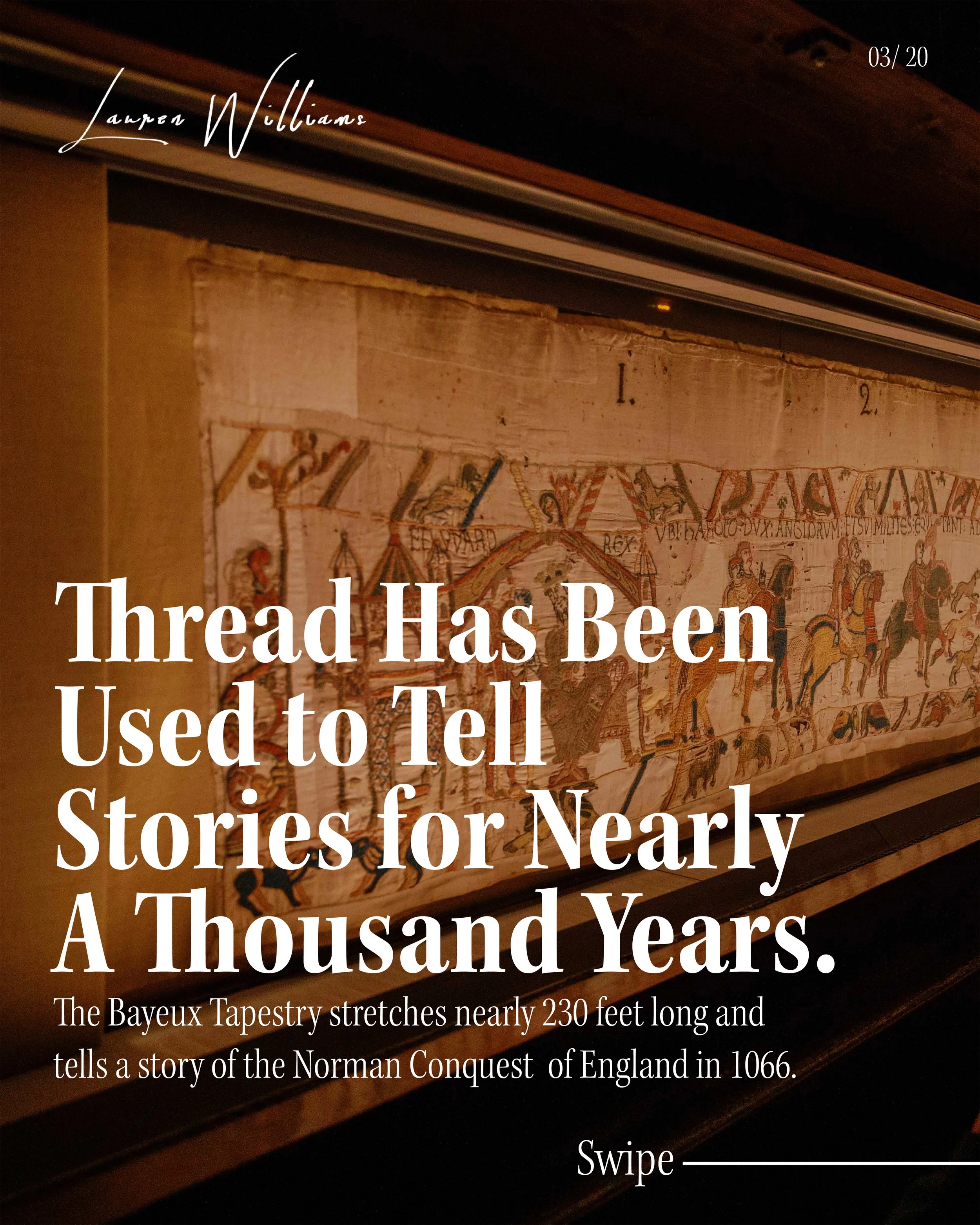
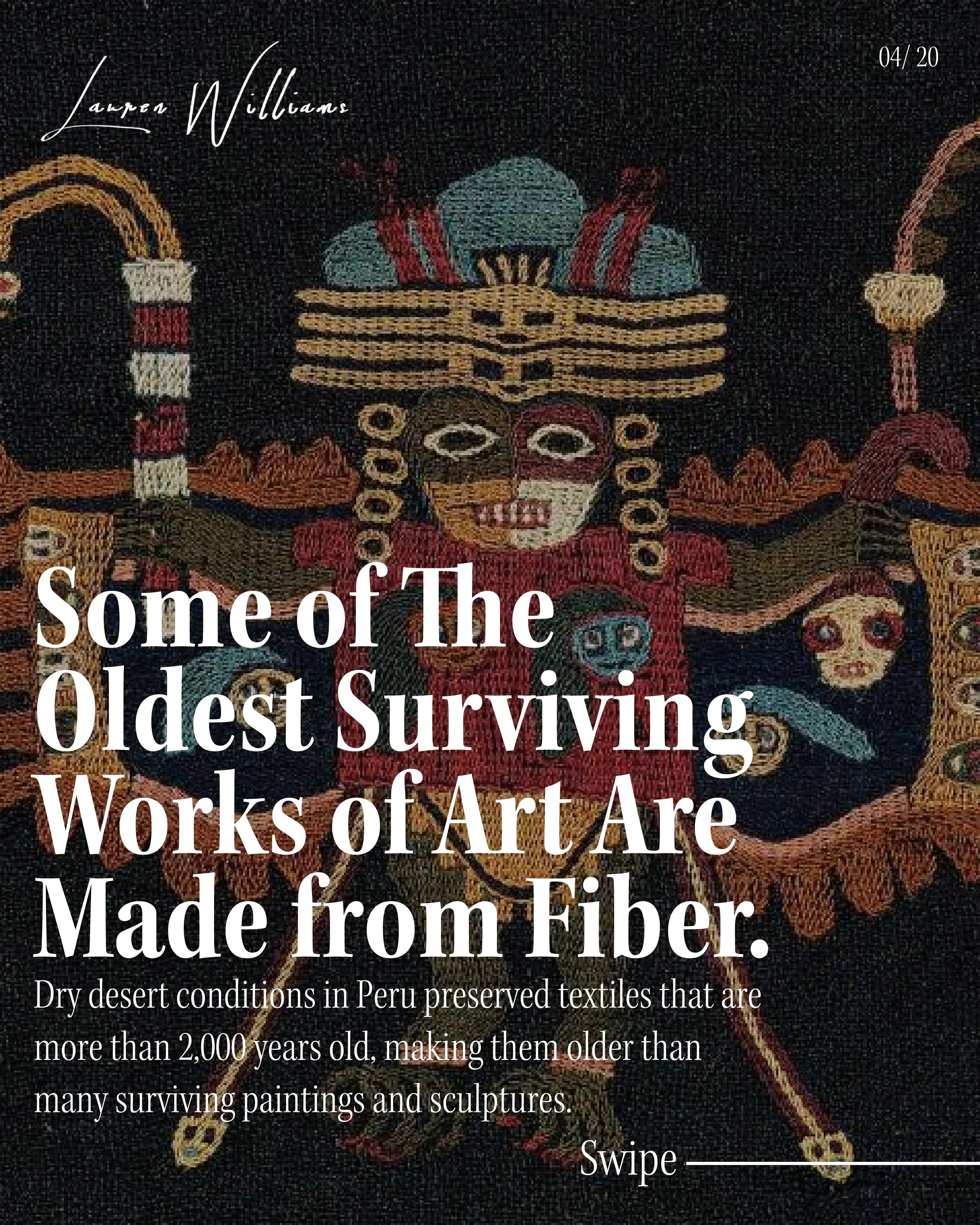
If you've ever searched for contemporary textile art, you've probably encountered another term almost immediately: fiber art.
Are textile art and fiber art the same thing?
The short answer is that they overlap considerably, and an artwork can often accurately be described as both.
Fiber art is a broad term for art in which natural or synthetic fibers are a significant material or medium. Textile art is generally more closely connected to textile materials, structures, processes, or traditions, including weaving, dyeing, stitching, knotting, and other methods of manipulating fiber.
Contemporary textile art takes that conversation into the present, with living artists using textile materials and processes to create work that can include abstraction, sculpture, installation, conceptual art, and architectural-scale work.
But after working with fiber as my primary medium for twelve years, I've learned that the distinction becomes much more interesting once you move beyond definitions.
Because the question isn't simply what is the artwork made from?
It's also:
What is the artist asking the material to do?
What Is Fiber Art?
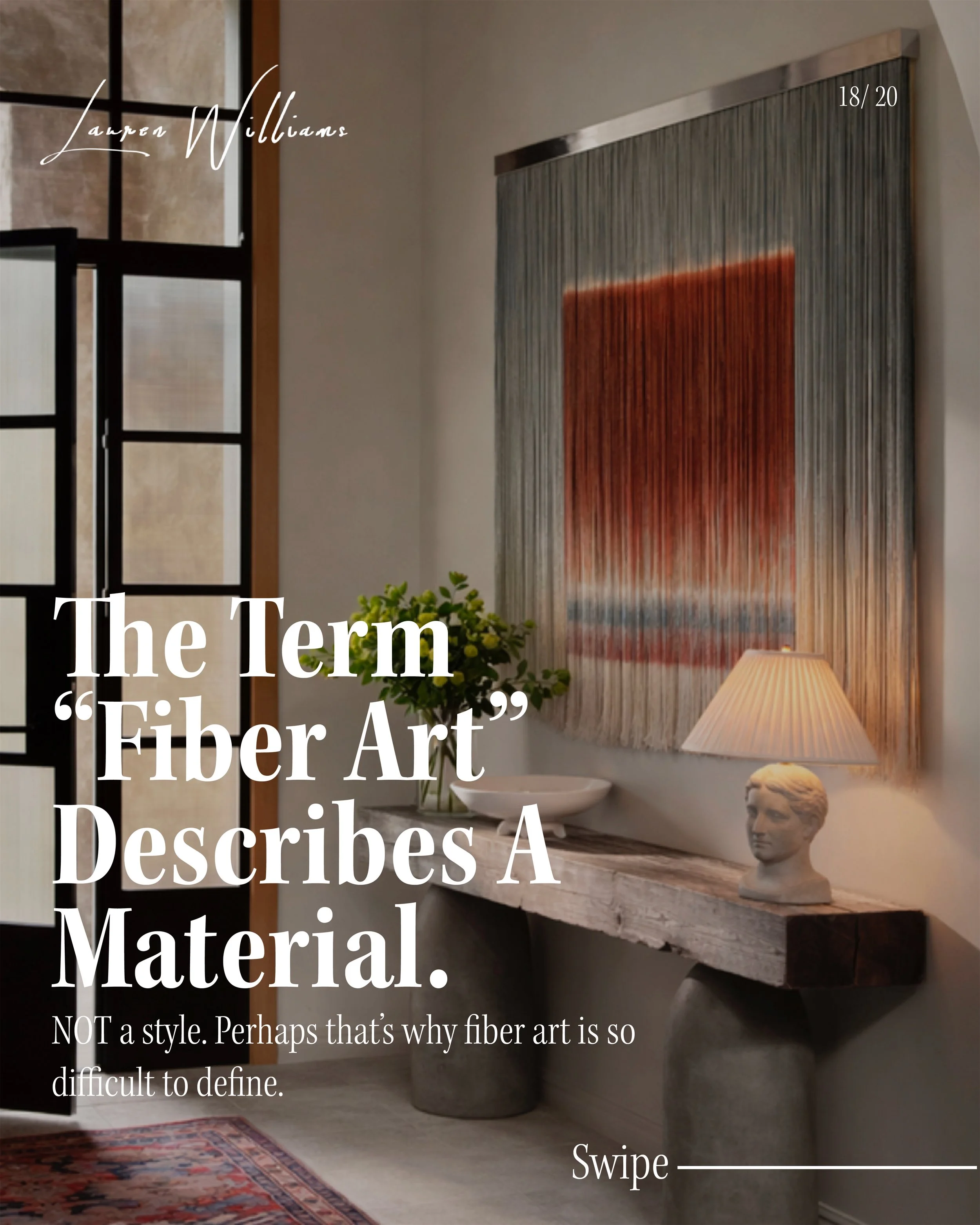
At its simplest, fiber art is artwork in which fiber is an essential part of the work.
Those fibers might be wool, silk, cotton, linen, yarn, thread, synthetic fibers, plant fibers, or less conventional materials.
Artists can weave them.
Knot them.
Dye them.
Twist them.
Suspend them.
Cut them.
Construct with them.
Or combine them with materials that have seemingly nothing to do with textiles at all.
That breadth is one reason fiber art can be difficult to define narrowly. The term describes the material relationship, but it doesn't necessarily tell you what the finished artwork will look like.
A fiber artwork might hang on a wall.
Another might sit on the floor as a sculpture.
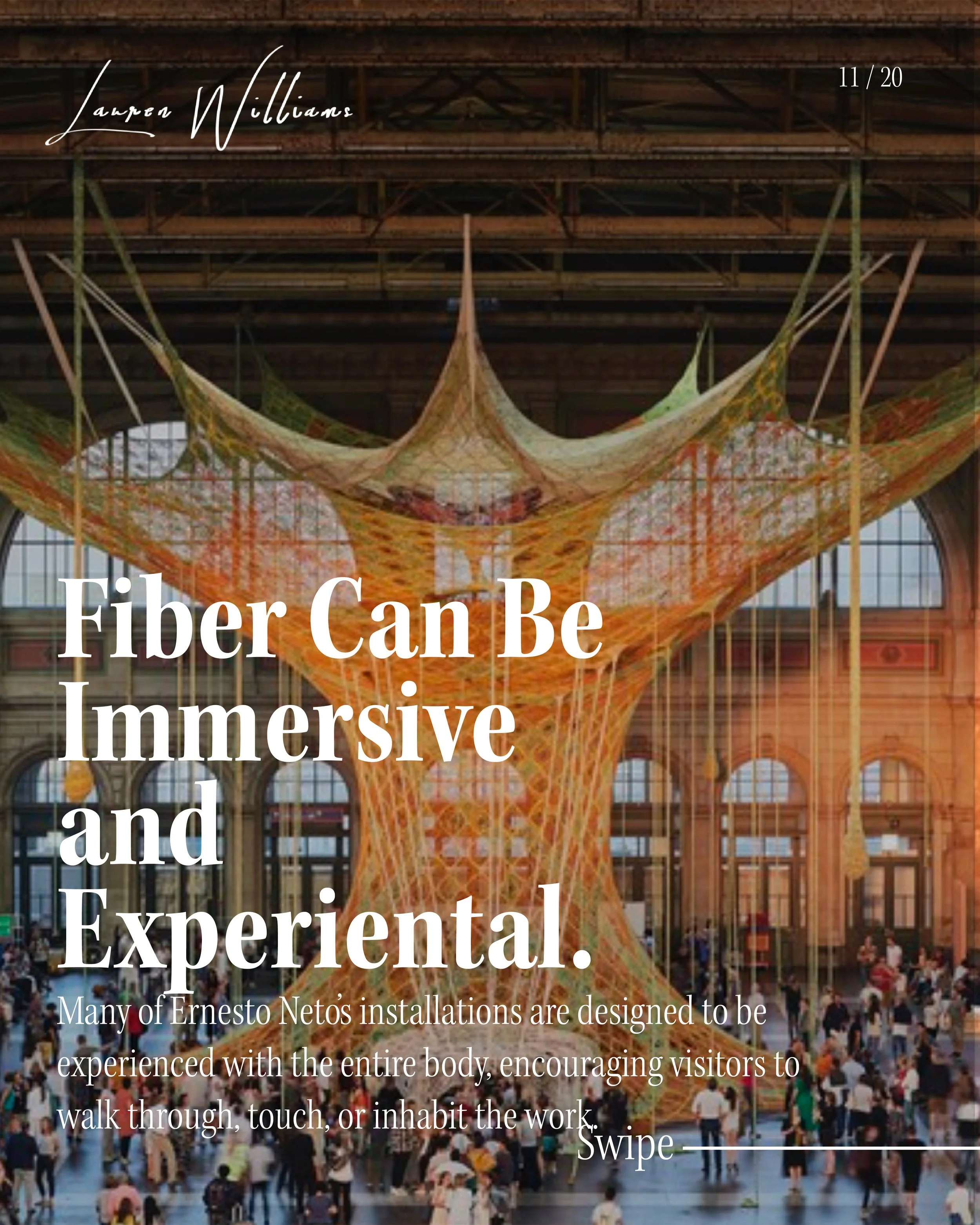
Another could fill an entire gallery.
And another might barely resemble what most people traditionally think of as a textile.
What Is Textile Art?
Textile art generally has a more direct relationship to textile materials, structures, techniques, or traditions.
That might include weaving, dyeing, stitching, embroidery, knotting, felting, fabric construction, suspended thread or fiber manipulation.
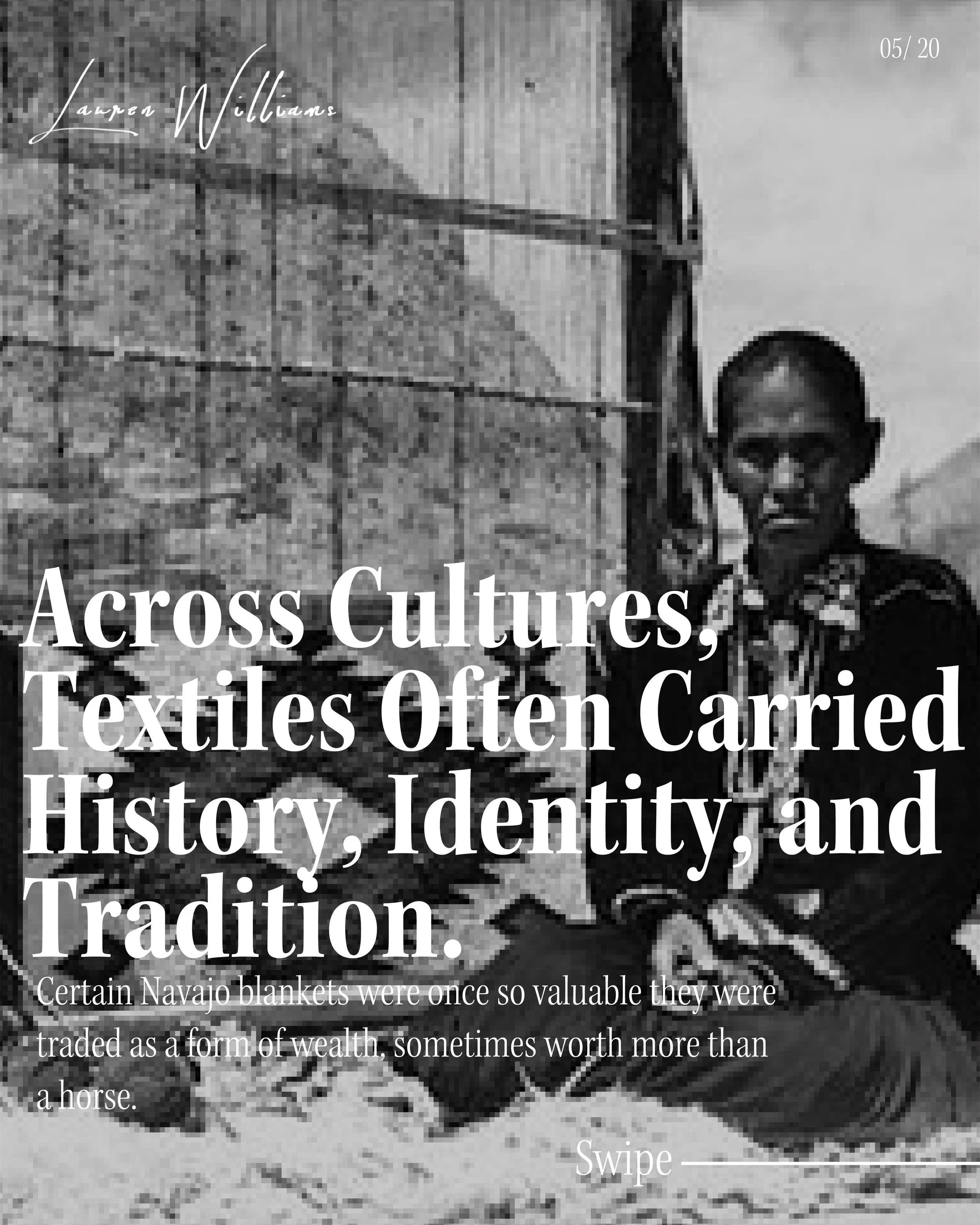
Historically, many of those processes were associated with functional objects: clothing, rugs, blankets, baskets, tapestries, upholstery and other objects made for daily life.
But artists have continually taken those materials and processes somewhere else.
They've removed function.
Changed scale.
Introduced abstraction.
Moved work away from the wall.
Combined textiles with unexpected materials.
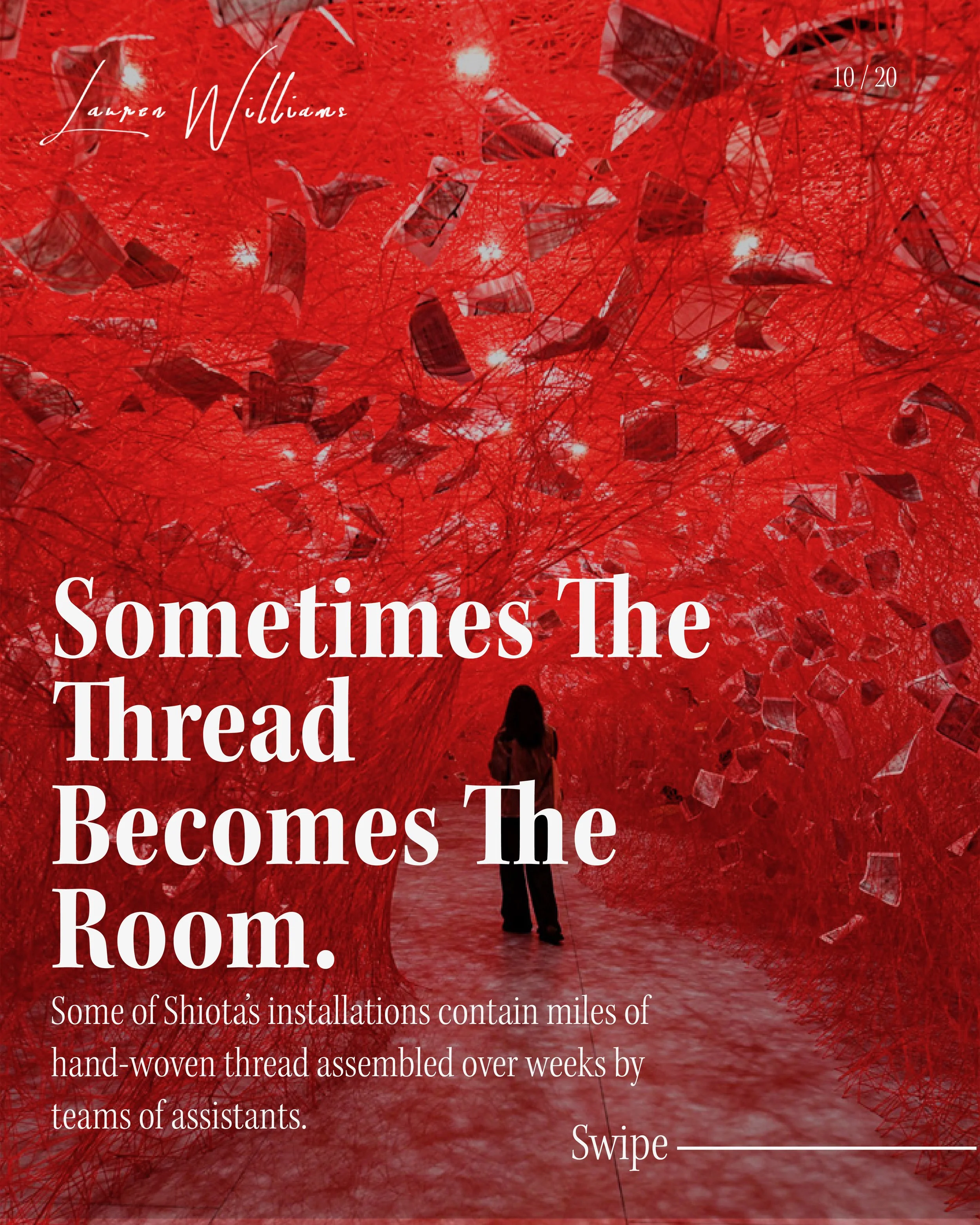
Allowed fiber to occupy three-dimensional space.
And increasingly blurred the distinctions between textile, painting, sculpture, installation, craft, and design.
This history has received considerable attention from major museums. The National Gallery of Art's Woven Histories: Textiles and Modern Abstraction brought together approximately 160 works by more than 50 creators to examine how textile practices contributed to modern abstraction and challenged longstanding hierarchies separating textiles from fine art. (National Gallery of Art)
That's an important part of understanding contemporary textile art today.
The boundaries have never been as clean as the terminology makes them sound.
So, What Is the Difference Between Fiber Art and Textile Art?
I think the easiest way to understand it is this:
Fiber describes the material.
Textile describes a broader relationship between material, structure, process, and textile tradition.
But there is enormous overlap.
A handwoven abstract artwork could reasonably be called both fiber art and textile art.
A sculpture constructed from thousands of threads might also fit both descriptions.
An artist might use a traditional textile technique but transform it so significantly that the resulting object is experienced primarily as contemporary sculpture.
There isn't always a point where one category ends and another begins.
And I don't think there needs to be.
Some of the most interesting contemporary artwork exists precisely because artists refuse to stay inside those boundaries.
Why the Terminology Has Changed
Part of the confusion surrounding these terms comes from history.
For generations, textiles were frequently separated from what institutions considered "fine art." Painting and sculpture occupied one category, while weaving, embroidery, textiles, and other material practices were often classified as craft, applied art, domestic work, or design.
That hierarchy has increasingly been challenged.
The National Gallery of Art describes twentieth-century textiles as having often been regarded as lesser because of associations with applied art, women's work, and domestic craft. Its Woven Histories exhibition was specifically organized to challenge those divisions and examine textile's contribution to abstraction and modernism. (National Gallery of Art)
MoMA's presentation of the same exhibition similarly examined more than a century of textile works that challenged accepted divisions between fine art and craft. The exhibition included everything from basketry and apparel to painting, sculpture, weaving, knotting, and braided materials. (The Museum of Modern Art)
When you look at textile art through that history, today's blurred terminology starts making more sense.
Artists didn't simply change the words.
They changed what the materials were allowed to become.
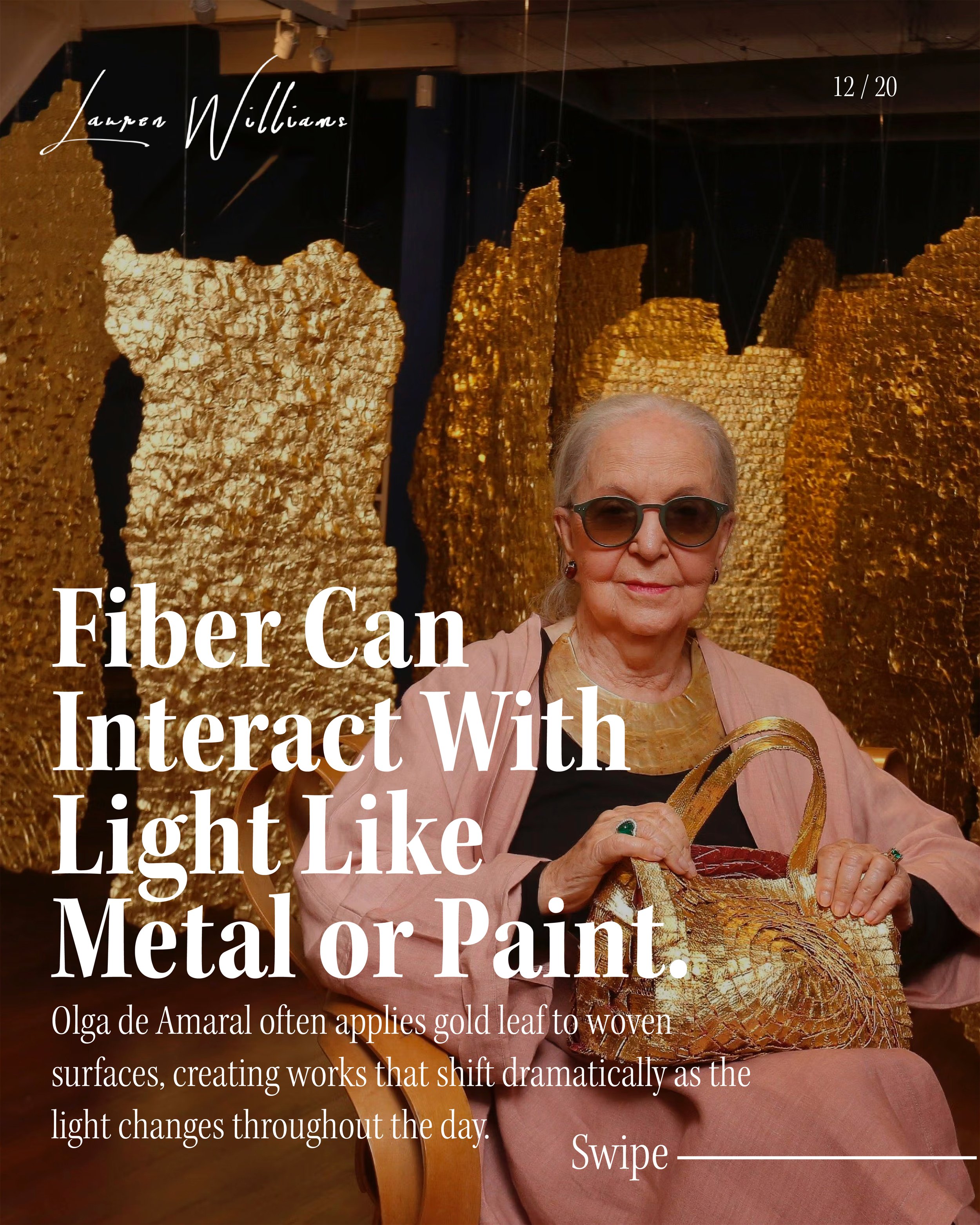
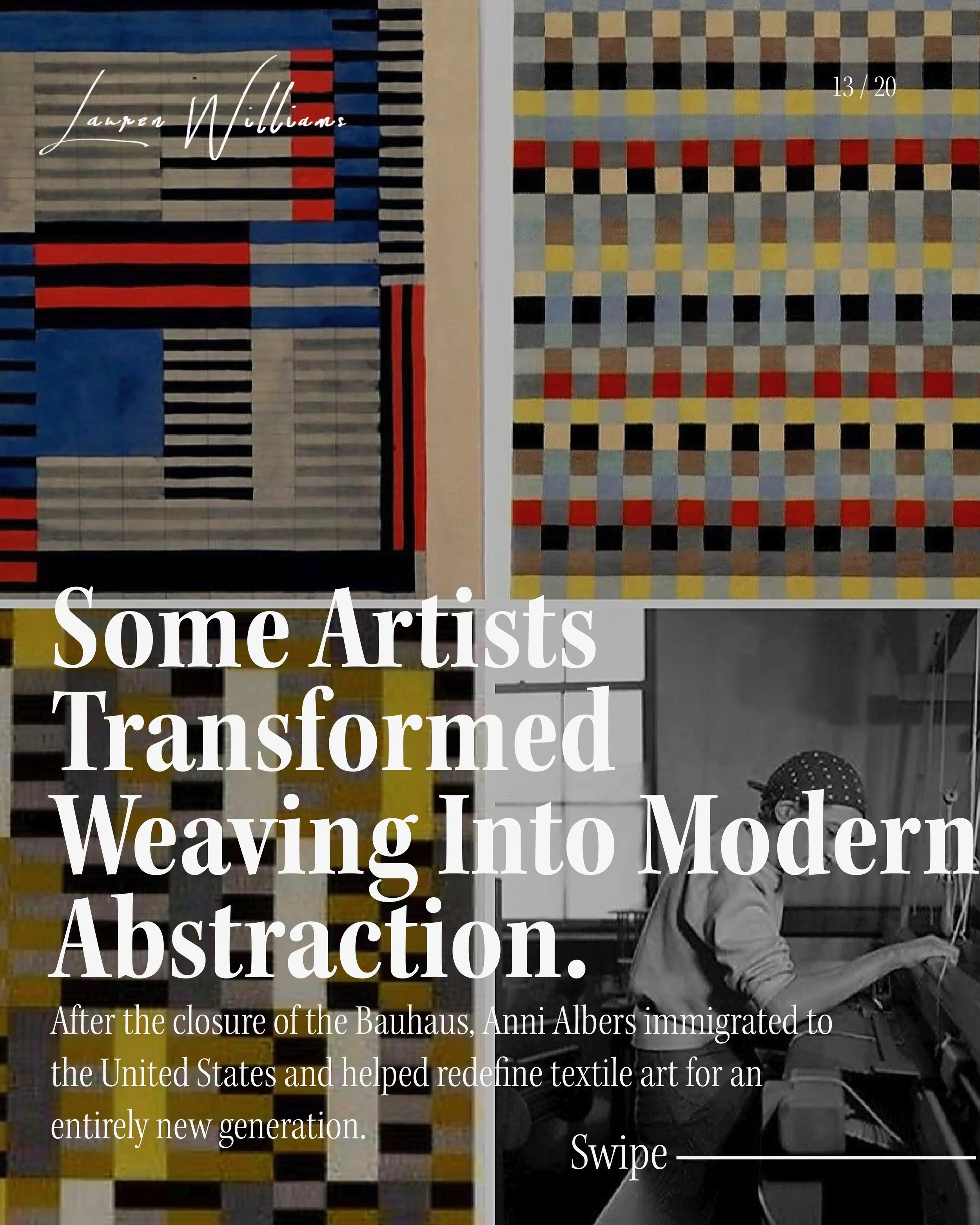
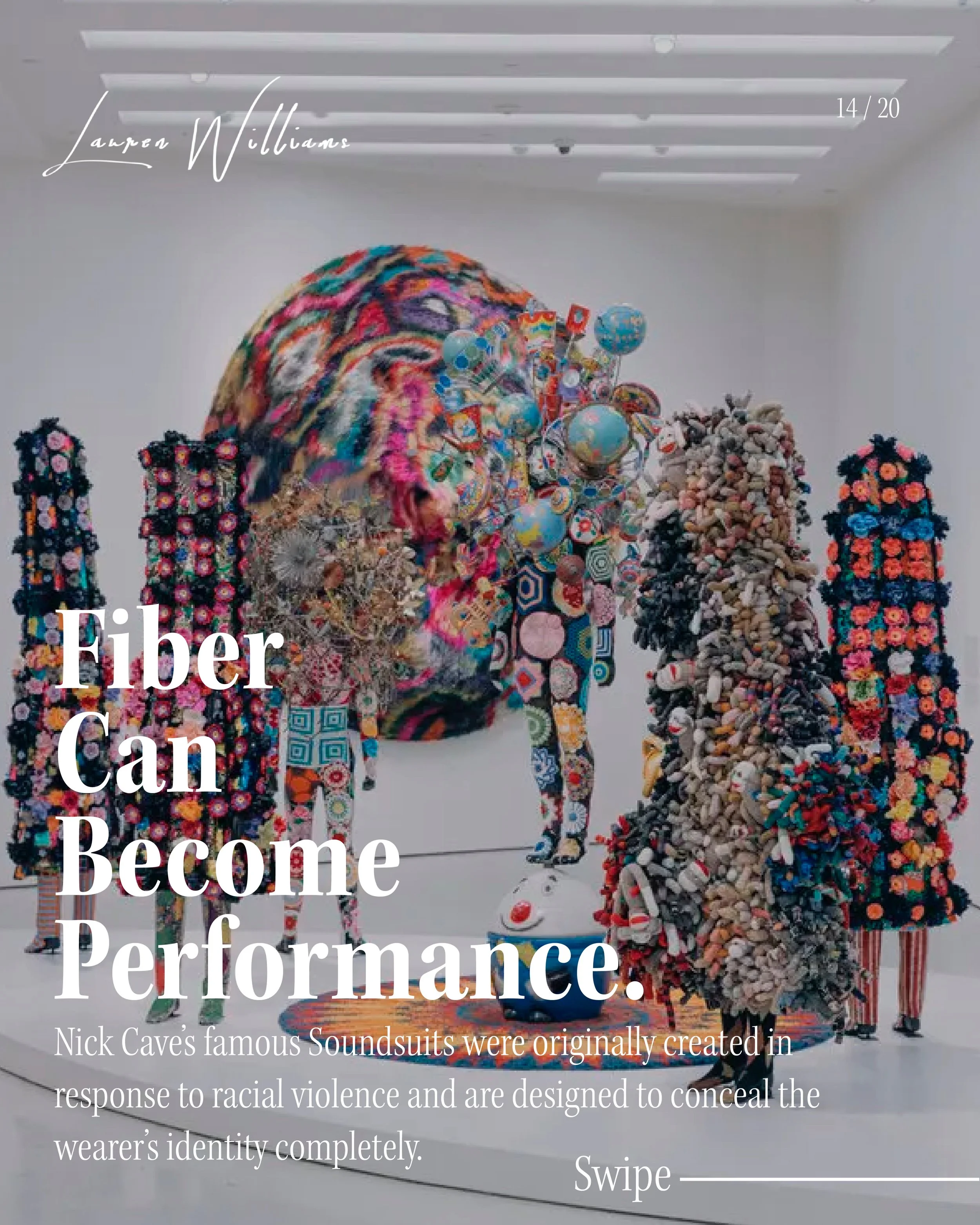
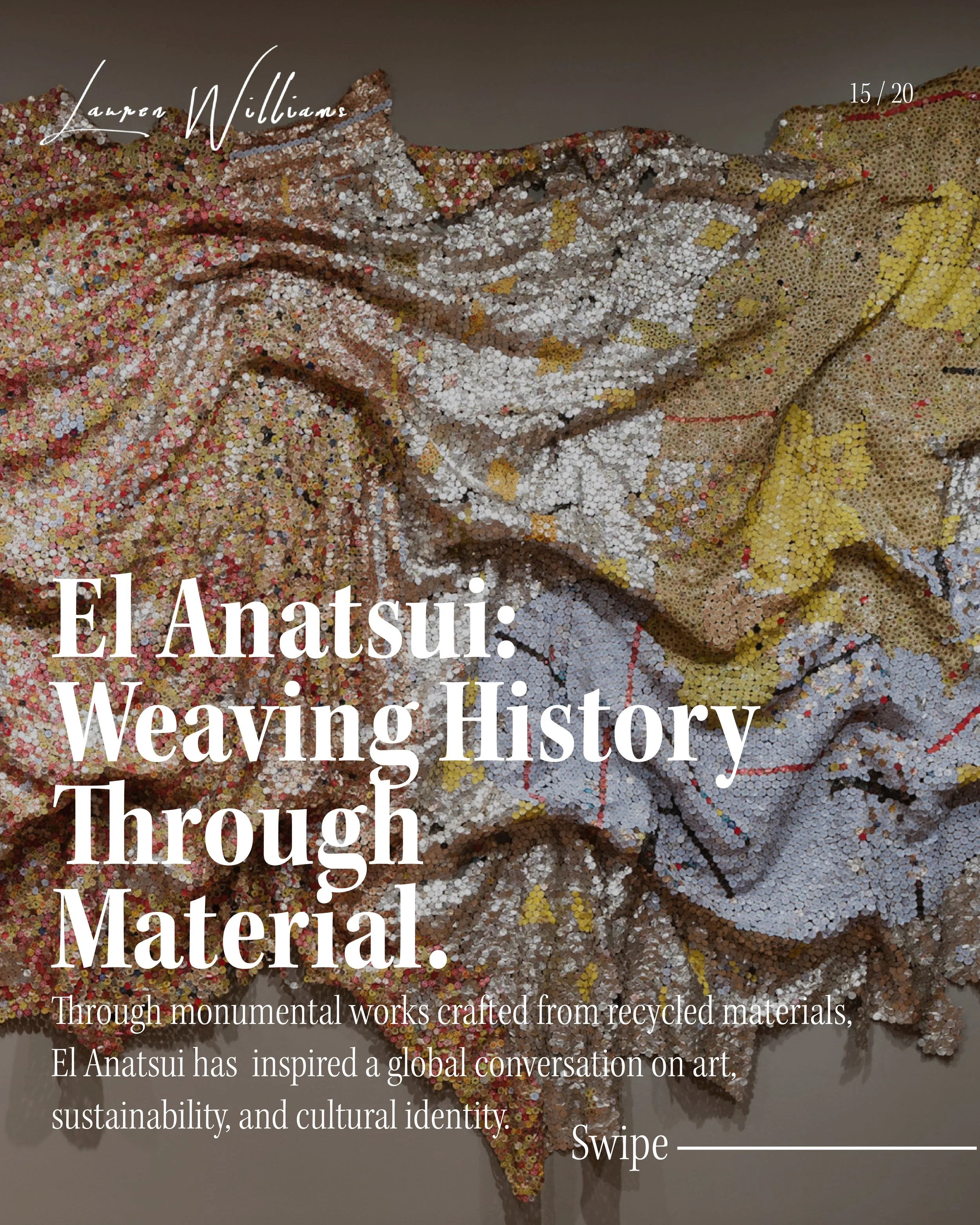
Artists Who Helped Expand the Language of Textile and Fiber
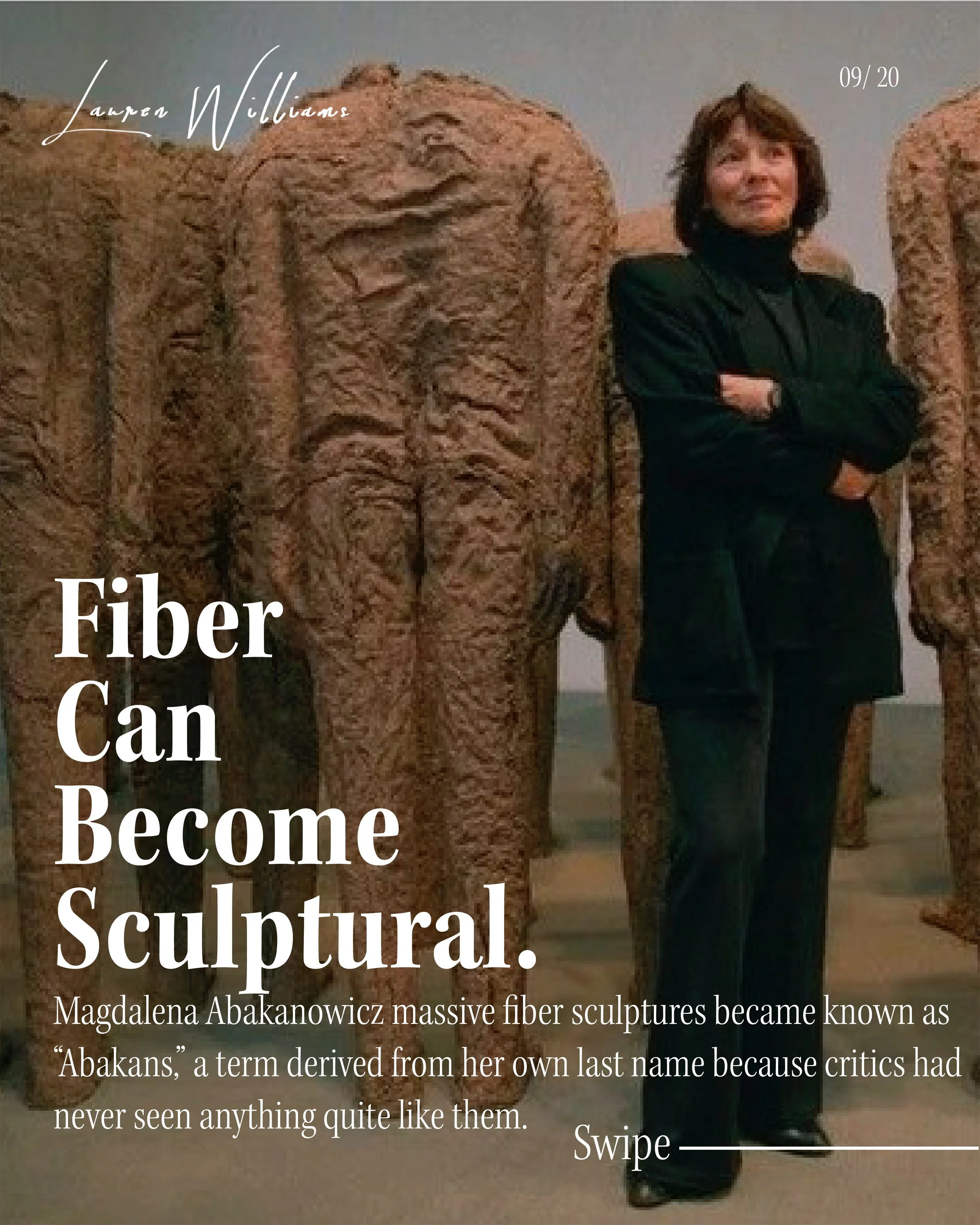
There are important artists throughout modern and contemporary art who demonstrate why these categories are difficult to separate.
Anni Albers helped establish weaving as a serious modernist medium, exploring structure, material, abstraction, and design.
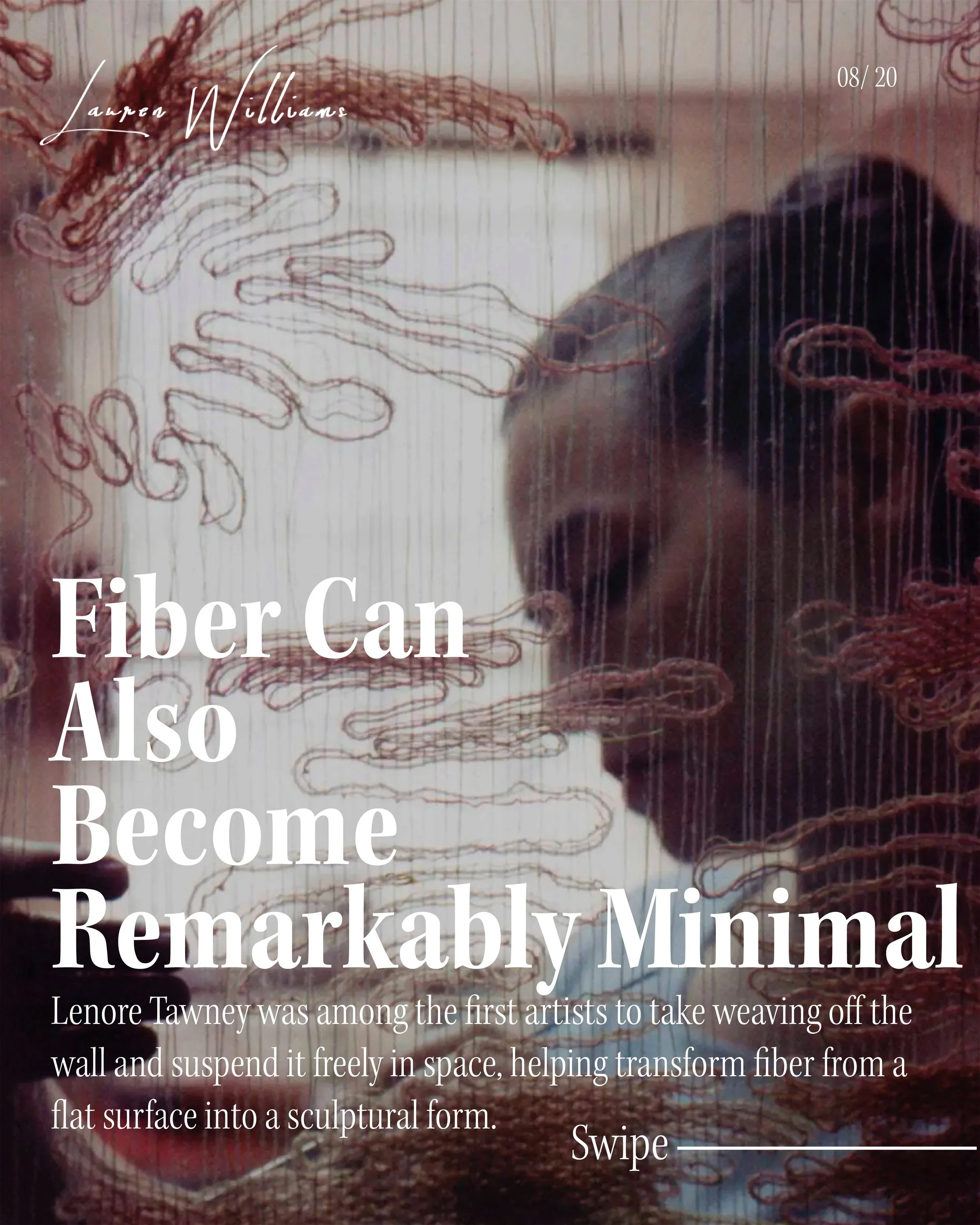
Lenore Tawney moved weaving away from conventional rectangular formats and toward more sculptural, spatial forms.
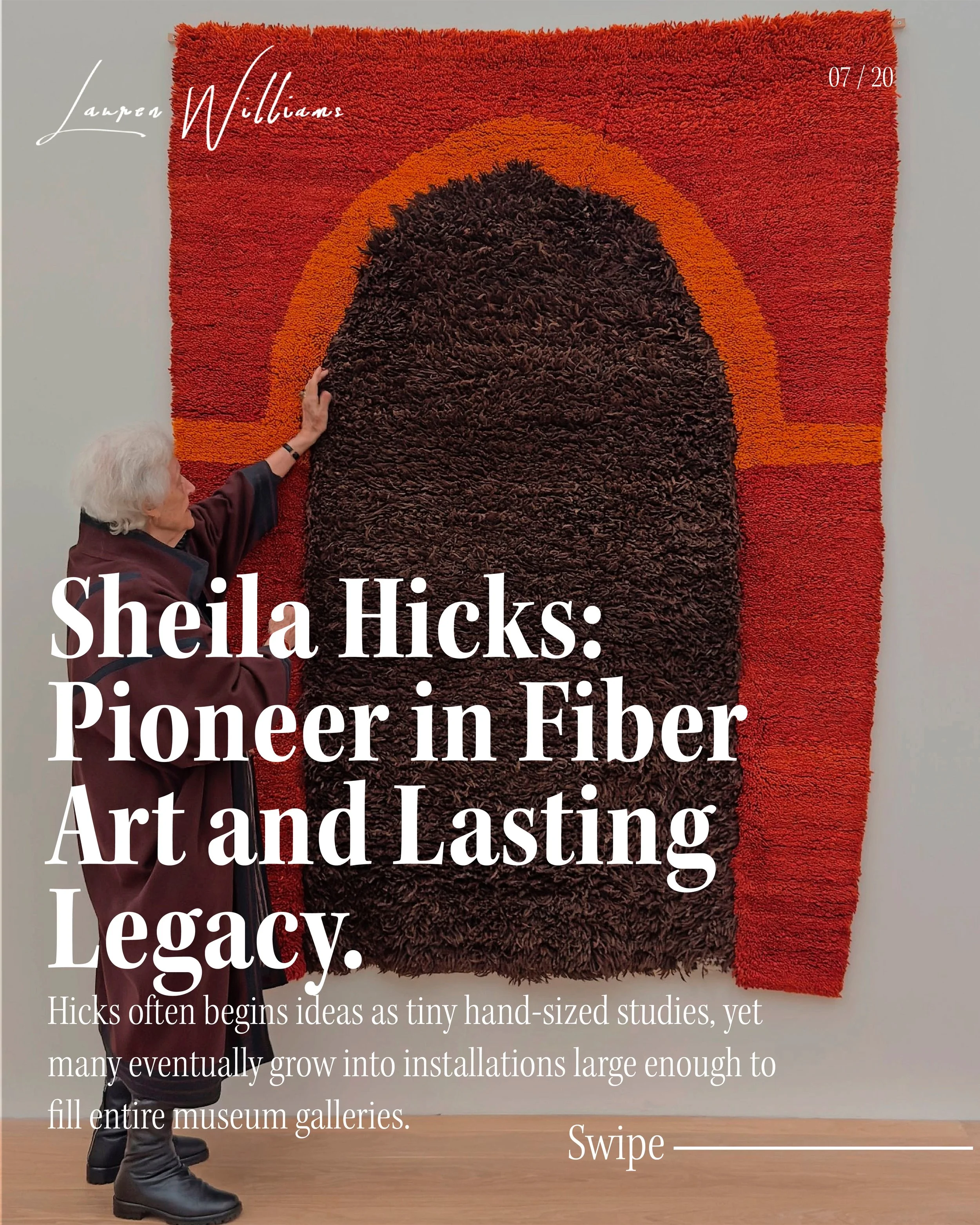
Sheila Hicks has spent decades expanding fiber into color, sculpture, installation, and monumental environments.
Ruth Asawa used wire and techniques connected to basket making to create suspended sculptural forms.
And subsequent generations of artists have continued expanding those possibilities.
The National Gallery of Art'sWoven Histories traces this lineage from artists including Anni Albers, Sonia Delaunay and Sophie Taeuber-Arp through Lenore Tawney, Sheila Hicks and Ruth Asawa and into contemporary practices by artists including Jeffrey Gibson, Igshaan Adams and Liz Collins. (National Gallery of Art)
What connects these artists isn't a single aesthetic.
It's a willingness to reconsider what textile and fiber can do.
And that's the part of the history I find most interesting.
Why I Call Myself a Contemporary Textile Artist
Technically, I could accurately describe myself as both a fiber artist and a textile artist.
Fiber is the primary material I've worked with throughout my career.
But contemporary textile artist feels more representative of where my practice has evolved.
I'm not interested only in fiber as a material.
I'm interested in what happens when textile begins behaving like something else.
Can fiber function like paint?
Can it create movement?
Can it interact with architecture?
Can something incredibly soft be combined with something rigid?
Can textile become sculptural without losing the qualities that make it textile?
Can an artwork change as someone walks past it?
Those are the questions that have shaped my work.
When Fiber Becomes Paint
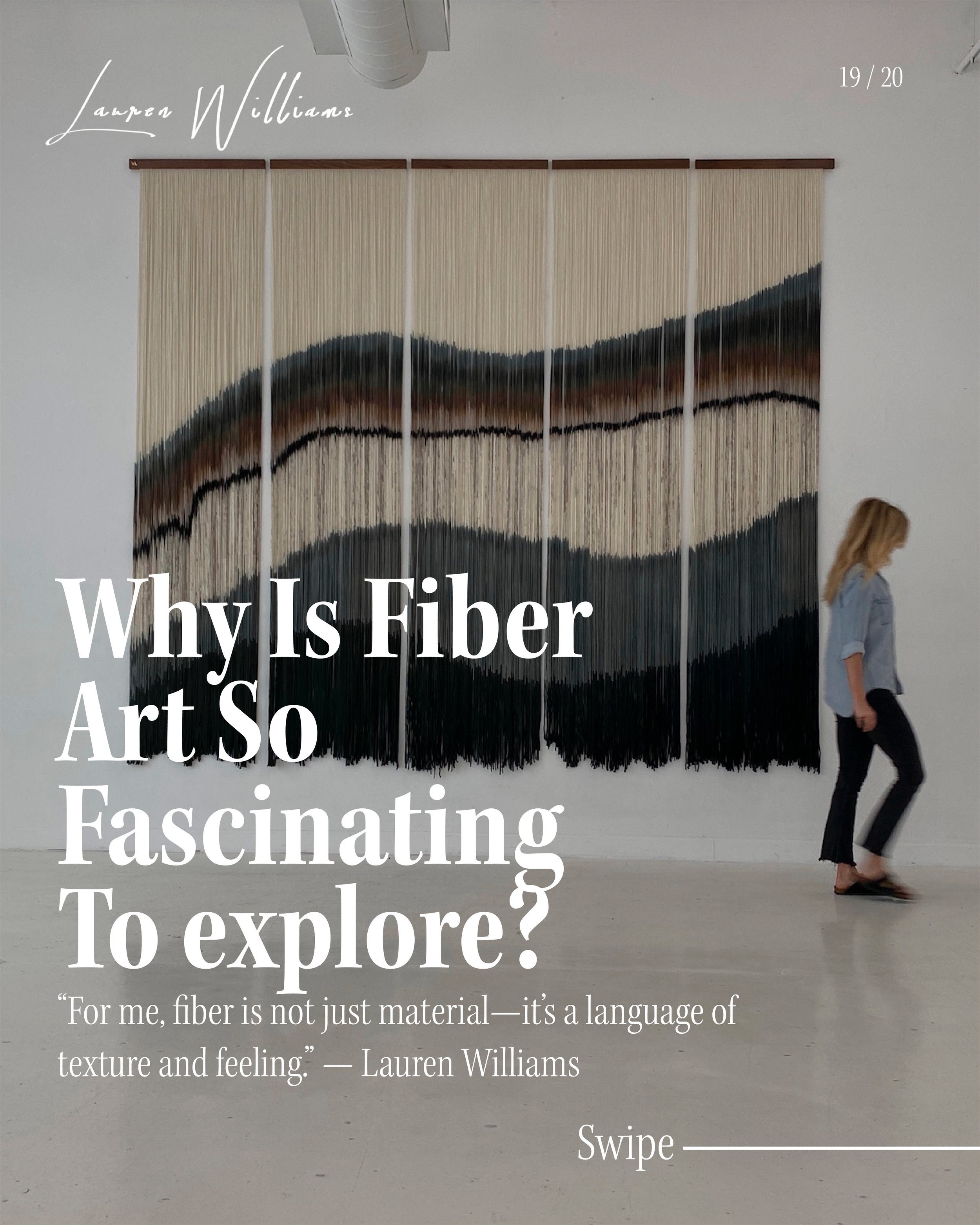
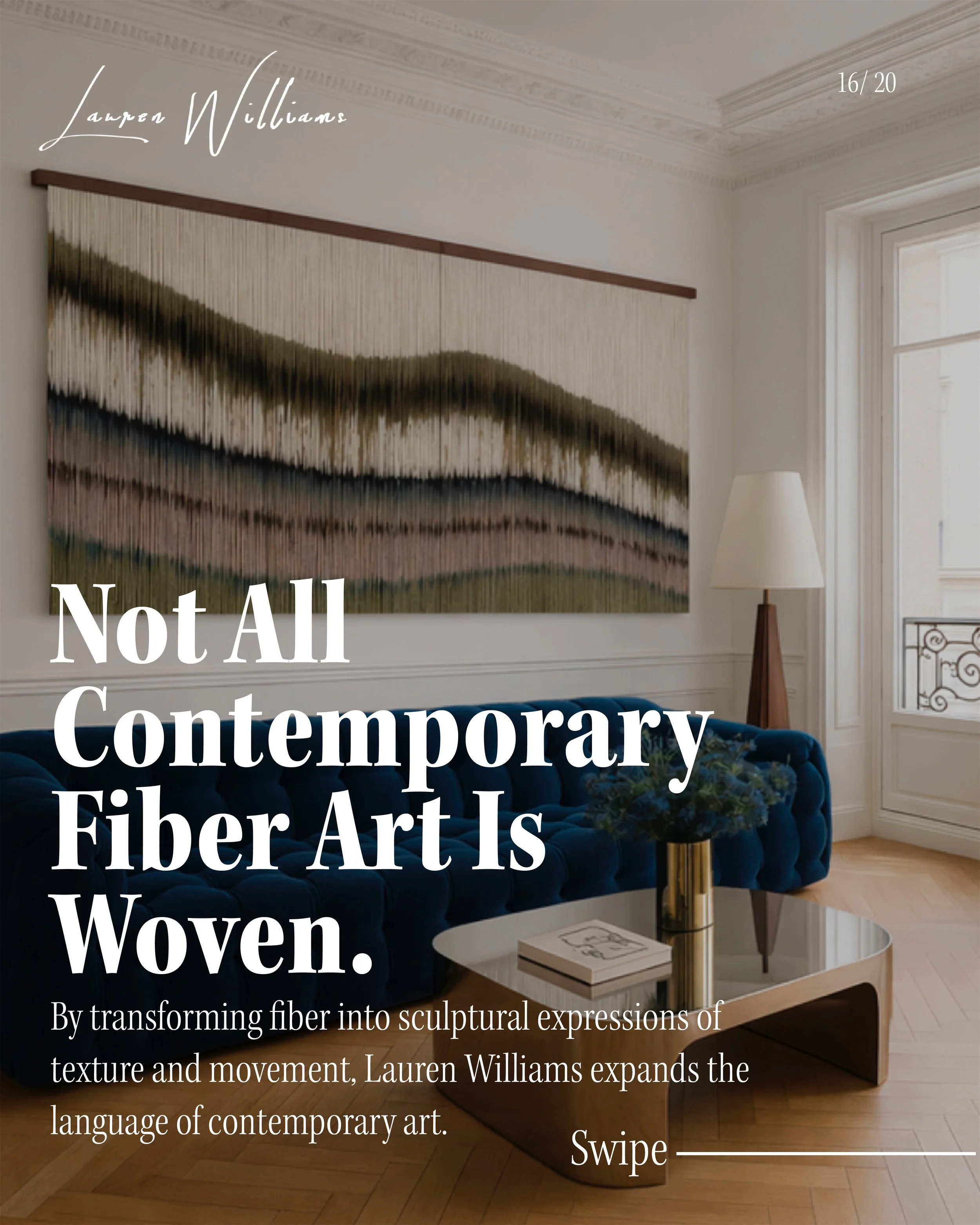
My first body of work, Canvas with Movement, began with suspended strands that I individually colored using dyes.
Over time, I started thinking of those strands almost like brushstrokes.
If you stand far enough away from one of the pieces, you see a composition of color.
Move closer and that composition begins breaking apart into hundreds or thousands of individual fibers.
But unlike paint applied to a traditional canvas, those marks aren't fixed.
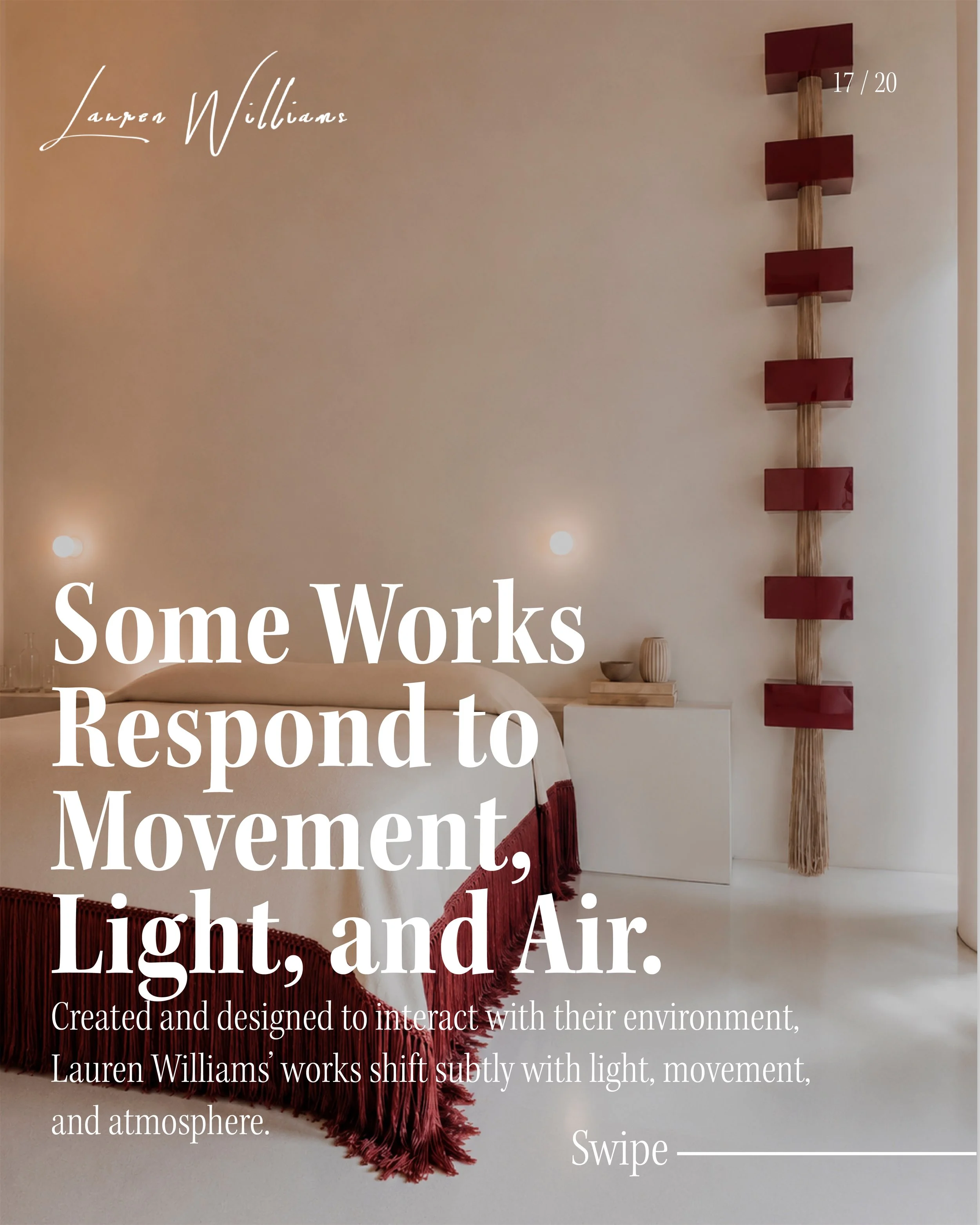
The fibers move.
Gravity affects them.
Air affects them.
Light moves between them.
The viewer can physically move around them.
So the work shares something with painting, but it also shares something with sculpture and installation.
What do we call it?
For me, contemporary textile art makes sense because textile remains at the center of the work even as I push it into other artistic territories.
[INTERNAL LINK: What Is Contemporary Textile Art? A Contemporary Textile Artist's Perspective]
When Textile Becomes Sculptural
My practice has continued moving further into that territory.
In Squares & Strands, fiber interacts with architectural acrylic forms.
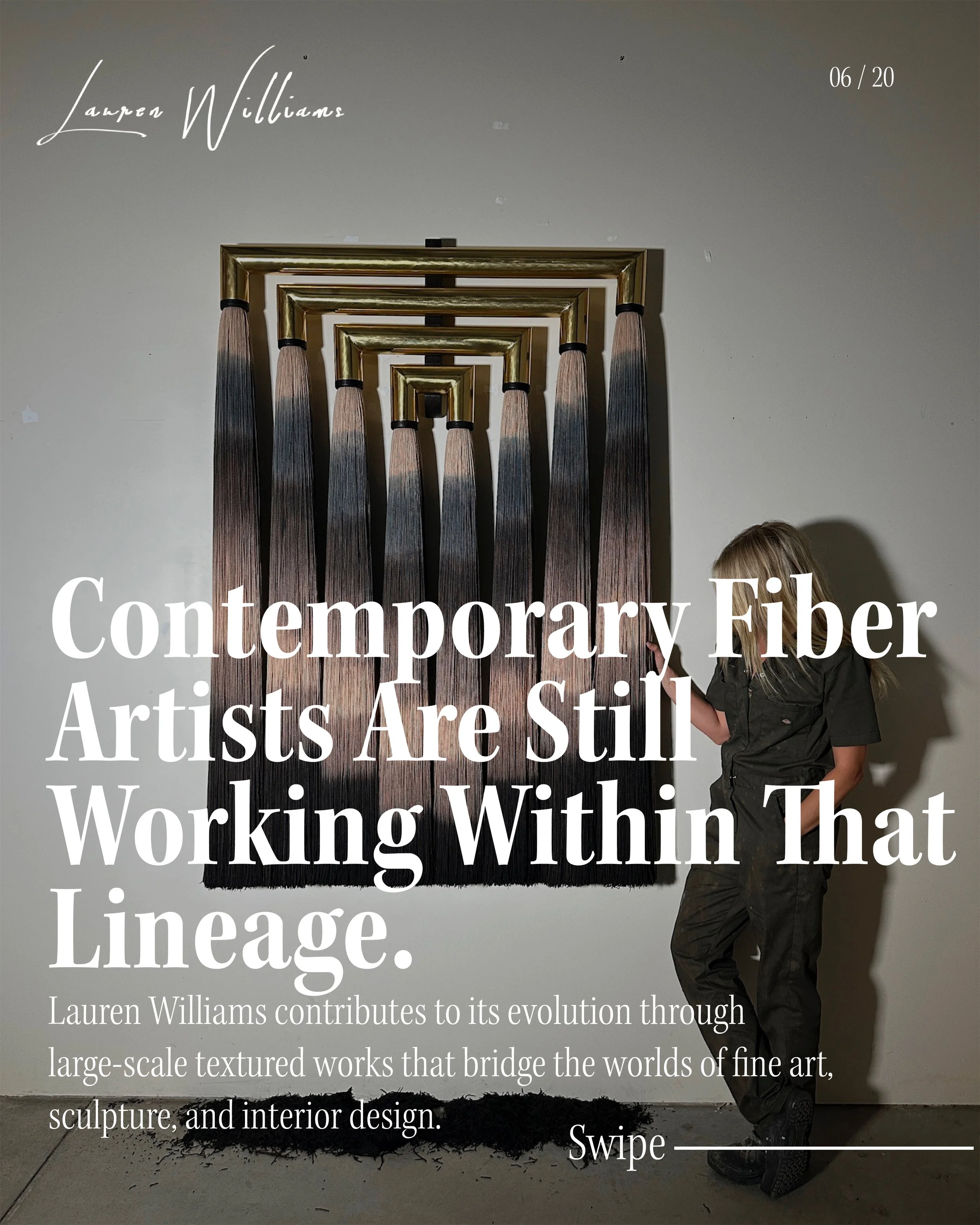
In Columns, soft textile elements are suspended within precise metal structures.
In Refined Canvases, I'm continuing to explore how fiber can occupy a more structured and architectural visual language.
These bodies of work look different from Canvas with Movement, but they're asking related questions.
What happens when something soft meets something rigid?
What happens when an organic material is placed inside a precise structure?
How does textile interact with reflective surfaces?
How far can fiber move away from our traditional expectations of textile before we stop recognizing it as textile art?
I don't know that I want a definitive answer to that last question.
The uncertainty is part of what keeps me interested.
Textile Art Is a Medium, Not a Style
This distinction also helps address one of the misconceptions I encounter most frequently.
Textile art is not a decorating style.
Fiber doesn't automatically mean bohemian.
Weaving doesn't automatically mean rustic.
Textile doesn't automatically mean soft or casual.
Look at the enormous variety among artists who have worked with textiles over the past century and it becomes almost impossible to assign the medium a single aesthetic.
A textile artwork can be minimalist.
Architectural.
Organic.
Geometric.
Monochromatic.
Highly colorful.
Monumental.
Quiet.
Or incredibly commanding.
The material doesn't determine the style. The artist does.
Why These Definitions Matter
You could reasonably ask whether any of this terminology actually matters.
To an artist standing in the studio making something, maybe not very much.
But language affects how artwork is discovered and understood.
It influences how museums categorize work, how galleries discuss it, how collectors search for it, how designers find artists, and increasingly, how search engines and artificial intelligence systems connect artists with particular mediums and ideas.
That's one reason I've become more intentional about describing my own work as contemporary textile art.
The terminology helps provide context.
But I never want the terminology to become a limitation.
The history of textile art is, in many ways, a history of artists refusing the boundaries placed around their materials.
I want to participate in that same spirit of experimentation.
Fiber Art vs. Textile Art: The Simple Answer
If you're looking for the simplest distinction:
Fiber art is a broad category of artwork in which fiber is a significant material or medium.
Textile art generally refers to artwork grounded more specifically in textile materials, structures, processes, or traditions.
Contemporary textile art describes the work of living artists who use those materials and histories within contemporary artistic practice.
But these categories overlap, and many artists and artworks can accurately belong to more than one.
For me, the most interesting work begins when those definitions stop being rules and become starting points.
Because after twelve years of working with fiber, I'm still much more interested in one question than I am in deciding exactly which category something belongs in:
What else can this material do?
Frequently Asked Questions
Are textile art and fiber art the same thing?
The terms overlap significantly, but they aren't necessarily identical. Fiber art broadly describes artwork in which fiber is a primary material. Textile art is generally more closely connected to textile materials, structures, processes, and traditions. Many contemporary artworks can accurately be described as both.
What is contemporary textile art?
Contemporary textile art is artwork created by living artists who use textiles, fibers, or textile processes as an essential part of their artistic practice. It can include wall-based artwork, abstraction, sculpture, installation, and architectural-scale work.
Is weaving textile art or fiber art?
It can be both. Weaving is a textile process that uses fibers, so an artwork created through weaving can reasonably be categorized as textile art, fiber art, or both depending on the artist and context.
Is fiber art considered fine art?
Yes. Fiber-based artwork is exhibited and collected by major museums, galleries, and institutions. Artists have spent generations challenging the historical separation between fiber and textile practices and categories such as painting, sculpture, and fine art. Major museum exhibitions continue to examine those relationships. (National Gallery of Art)
Is textile art always woven?
No. Contemporary textile artists may dye, knot, stitch, suspend, felt, braid, layer, construct, sculpt, or otherwise manipulate textile materials. Weaving is only one of many textile processes.
Why does Lauren Williams describe herself as a contemporary textile artist?
Lauren Williams describes herself as a contemporary textile artist because textile and fiber form the foundation of her artistic practice, while her work also explores abstraction, movement, sculpture, color, installation, and architecture. Her practice includes Canvas with Movement, Refined Canvases, Squares & Strands, and Columns.